Trouser fit can become confusing when every concern is described as a length problem. The distance from waistband to crotch and the length of the leg influence different parts of the garment. A hem adjustment cannot necessarily answer a question about the rise. Checking those areas separately helps you describe what you feel and avoids expecting one alteration to solve an unrelated issue.
Establish where the waistband belongs
Fasten the trousers and let them settle at the position you intend to wear them. Do not pull the waistband higher solely to lift the hem off the floor, because that changes the rise at the same time. If the leg is too long for a safe, ordinary trial, make a temporary fold appropriate for looking at the fit, without treating that fold as a finished alteration plan.
Notice how the waistband sits when you stand naturally. Then sit in a regular chair with your feet supported as they usually would be. Pay attention to comfort across the waist and through the seated area. You are not trying to produce a crease-free garment. Fabric folds when a body bends; the question is whether the trousers allow the position you need without persistent pressure or unwanted movement.
Change one position at a time
Stand and sit again without readjusting the waistband between every movement. Observe whether it stays near the intended position or repeatedly moves somewhere else. A trouser cut may sit differently on different people, so use your own experience of the actual garment. Compare it with a familiar pair if that helps you name the difference, while allowing for a different fabric or silhouette.
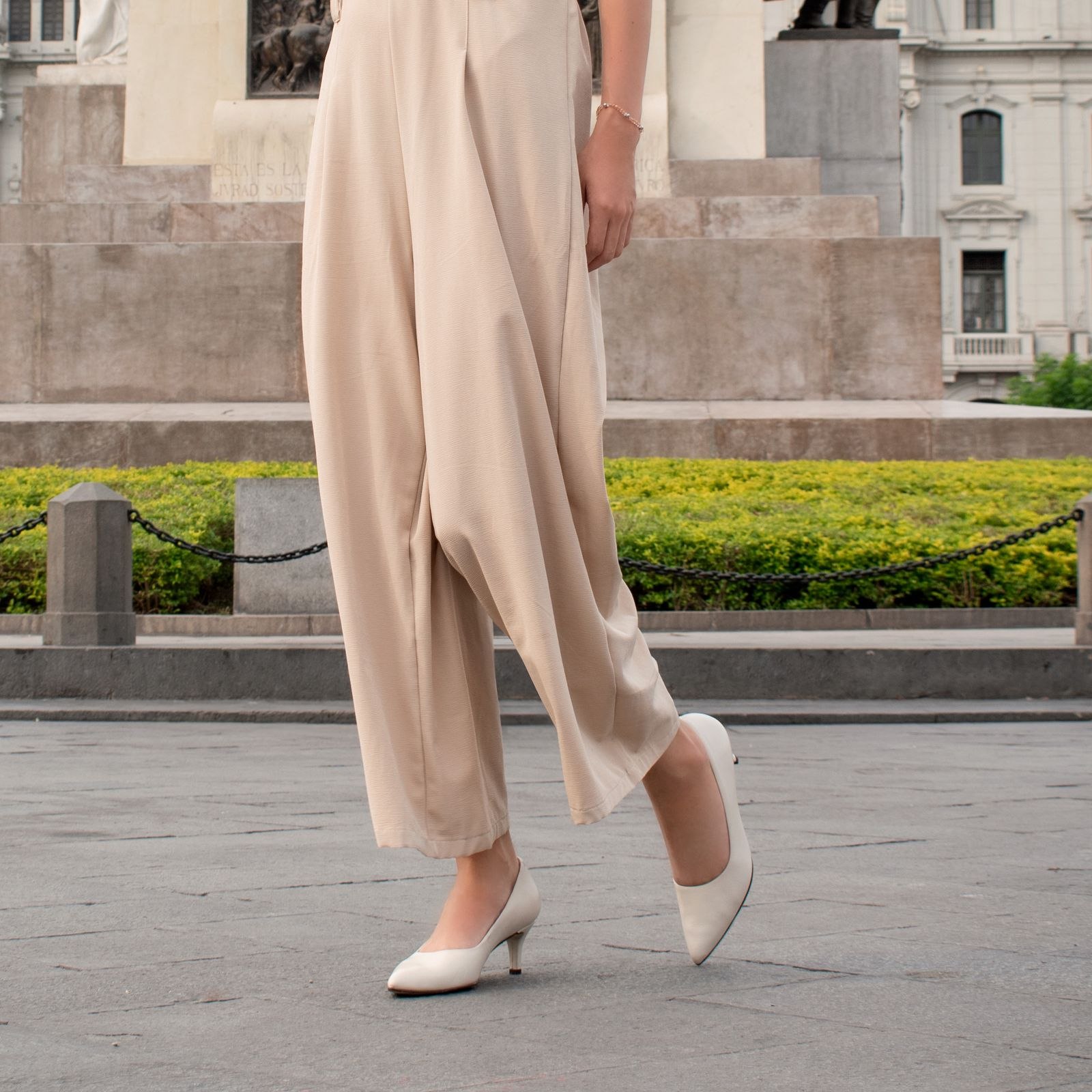
Now consider the hem with the shoes you intend to wear. Keep this as a separate note. You might find that the rise feels comfortable but the leg needs a length decision, or that the hem looks right while the seated fit remains unsuitable. Writing those observations separately makes a fitting-room conversation more precise. It also helps you decide which issue needs answering before any purchase or alteration.
Describe the result rather than diagnosing it
Use practical language: comfortable standing but tight at the waistband when seated, for example, or the waistband shifts after sitting. You do not need to identify a technical pattern-cutting cause in order to decide that a pair does not suit your day. If discussing adjustments with a qualified alterations provider, bring the actual trousers and explain the movement that produces the difficulty.
Avoid treating a different size as a guaranteed answer until you have tried it. A change may improve one area and alter another. Repeat the same short sequence so that the comparison remains meaningful. The strongest fit decision distinguishes the rise, waistband and hem questions and leaves you with trousers that work through the seated as well as the standing part of their intended use.
Related reading
Building a Work Capsule Around Two Pairs of Trousers, Include the Back View in an Ordinary Clothing Fit Check.