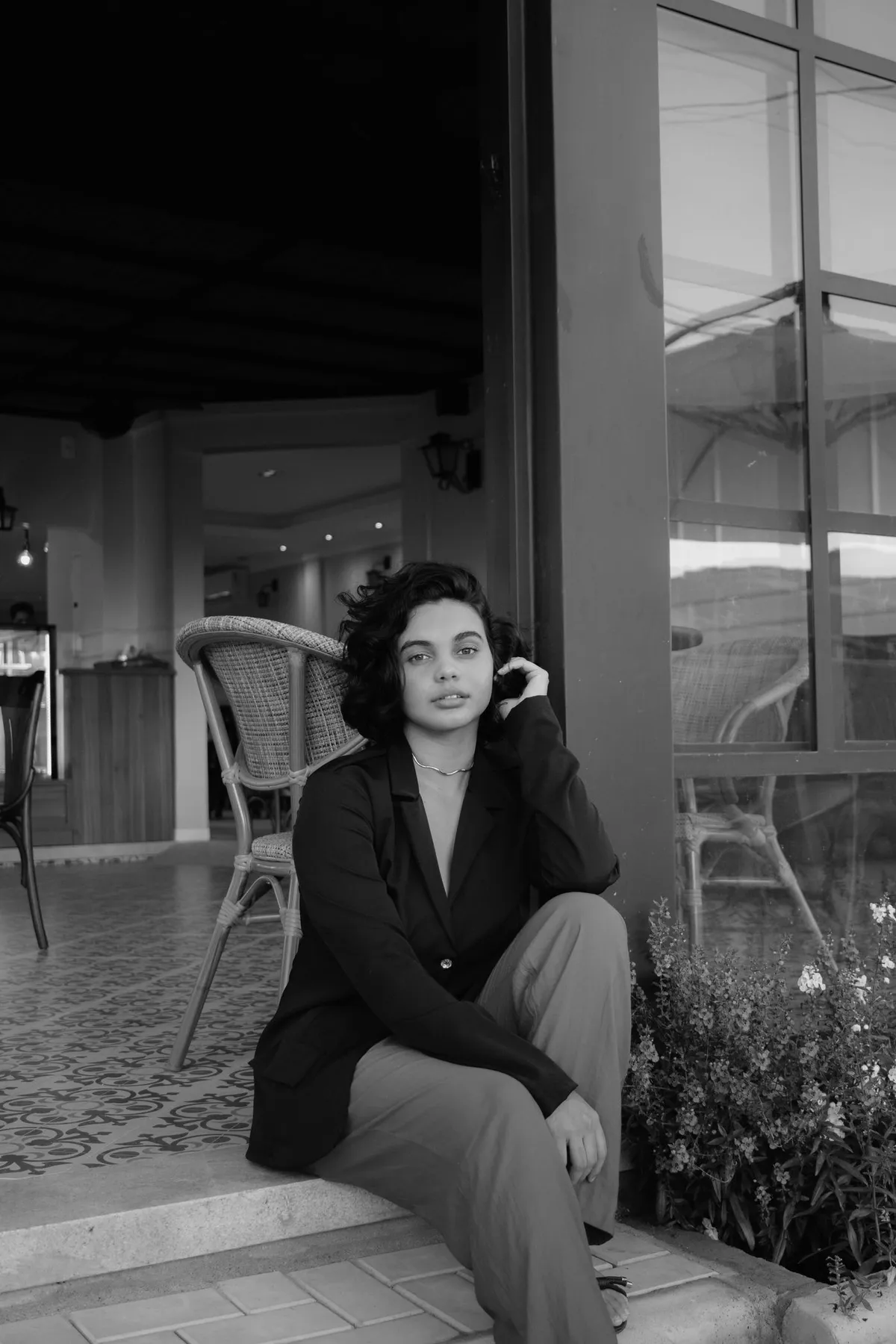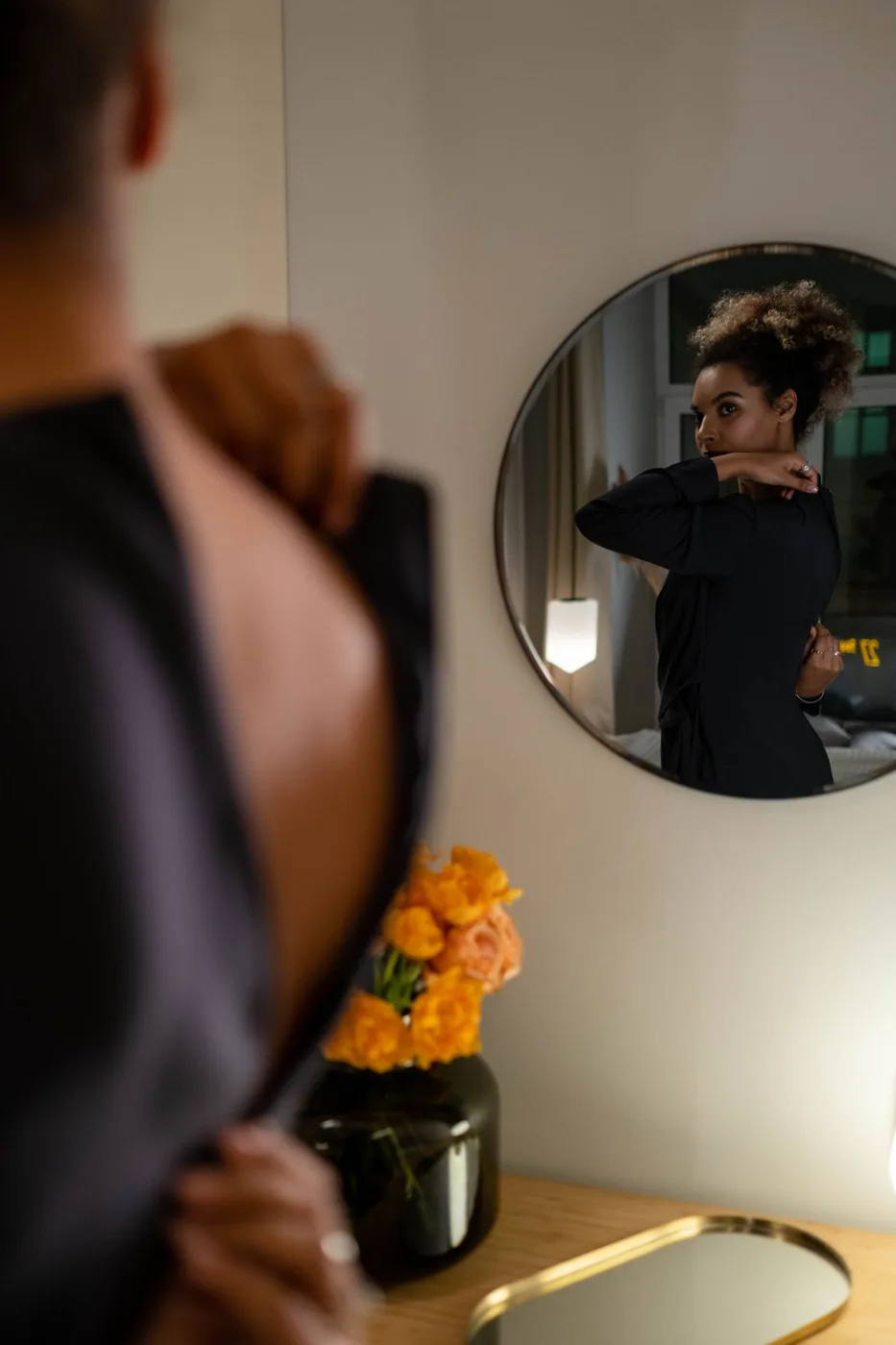
The front mirror view is only one part of a clothing fit decision. Include the back and side views where you can do so comfortably and appropriately, then check ordinary movement. The aim is to understand the garment on your body, not search for a flawless shape from every angle. Consider the intended design, personal comfort and the outfit it will join. A practical fit check should help you make a clear choice rather than turn getting dressed into an extended inspection of details that do not affect your use.
Start with the garment's design
Read the product information and notice whether the piece is intended to be fitted, relaxed or shaped in another way. Avoid judging every fold as a problem without considering that design. Try the actual size with the relevant underlayers. If a fit concern needs professional assessment, seek appropriate advice rather than assuming it can be altered easily. The mirror can show how the garment sits, but it cannot establish the feasibility or cost of a tailoring change that depends on the specific construction.
Use an appropriate viewing arrangement
Check the available mirror safely and follow its installation and use instructions. Keep access clear and avoid awkward positions or unstable arrangements to obtain another angle. Ask for suitable help where useful and respect your own privacy and comfort. You do not need a photograph or a second mirror to make every clothing decision. The relevant view is one that helps answer a practical question, such as how the back of a jacket sits over the top you intend to wear beneath it.
Add ordinary movement to the view
Reach, sit and move within your comfort and ability in ways appropriate to the garment and intended use. Notice where it feels restrictive or needs repeated adjustment. Keep personal guidance relevant to your needs central rather than treating a general styling checklist as universal. A garment may look settled while standing and still be uncomfortable for the actual day. Conversely, some movement in the fabric may be part of the intended shape. Judge the view and the feeling together instead of allowing either one to provide the entire decision.
Check the complete outfit
Try the garment with the actual pants, skirt or other pieces that will accompany it. Include the bag and outer layer where they affect the fit. The back view of a top can change when it is tucked or worn beneath a jacket, so compare the relevant version. Avoid buying a piece for a theoretical combination that has not been tried with the clothing already owned. A complete outfit provides a more useful context than repeatedly adjusting one garment without deciding how it will be worn.
If shopping, check current product information and applicable purchase terms directly with the retailer. Make the choice based on the intended role, appropriate fit and your comfort, not on a single idealized mirror pose. Including the back view can clarify an ordinary question, but it should remain proportionate to the task. The useful result is a garment you understand and can wear through the planned day, with any necessary next action clear before it enters the closet as another unresolved purchase.
Continue planning with How to Read a Clothing Size Chart Without Guessing, Before You Buy a Blazer, Check These Five Details.