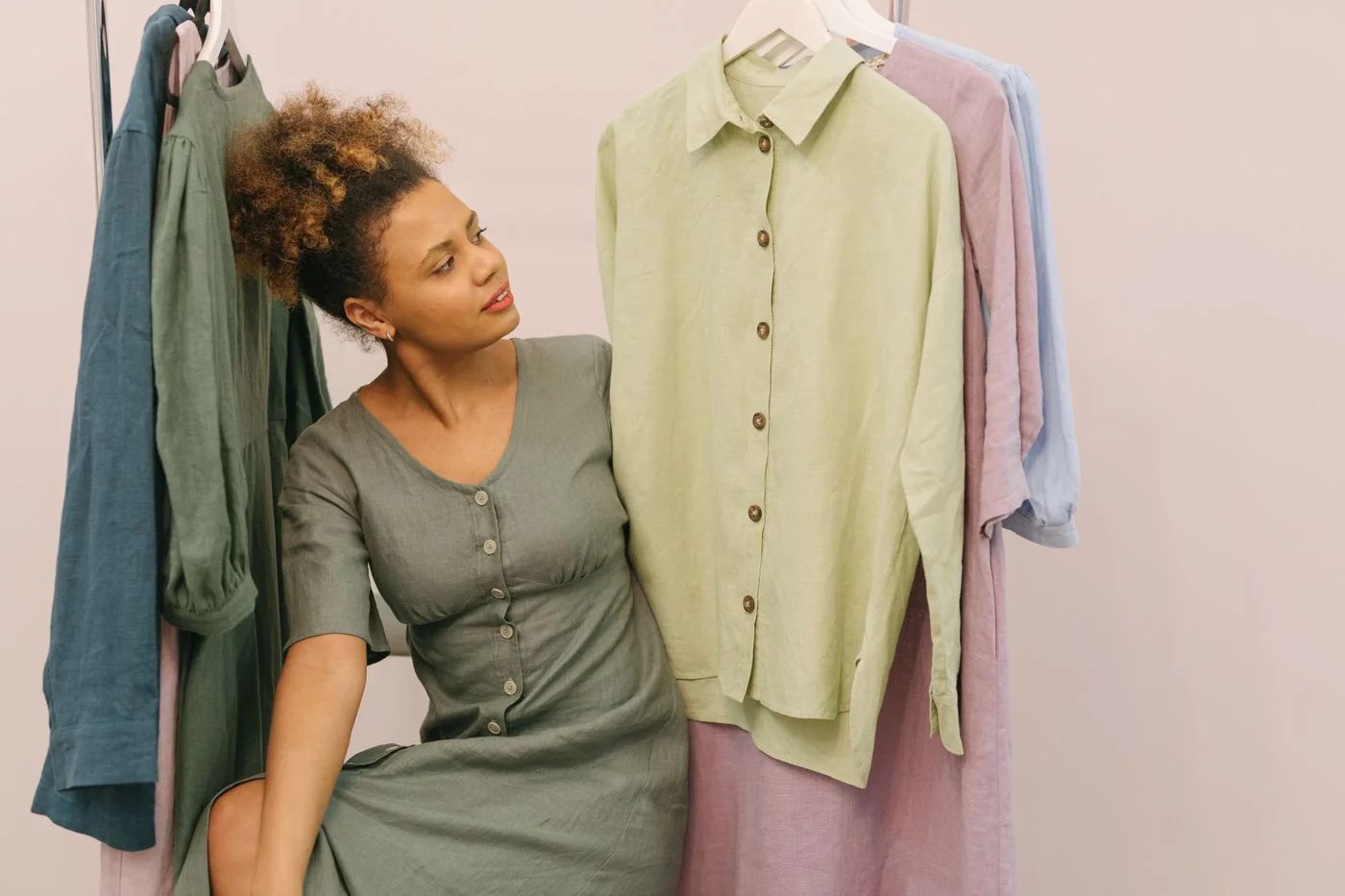
A question asking whether secondhand clothing is in good condition may be too broad to resolve the detail that matters to you. Identify the actual area and explain what is unclear in the listing. A precise, respectful question gives the seller a better chance to provide useful information. It also keeps your own decision tied to an answer rather than to a general reassuring phrase.
Read the existing information first
Check the full description and available photographs before asking. The relevant detail may already be shown from another angle or explained in a condition note. Distinguish what you can actually see from what you are inferring. A shadow or fold in a photograph should not be described as a confirmed defect without evidence.
Identify the garment through the seller's actual listing reference and use the platform's appropriate communication process. Avoid copying private seller information into a public comparison note. Keep the question about the item rather than making assumptions about how its previous owner lived or cared for it.
Name the location plainly
Describe the relevant seam, fastening, lining area or other identifiable feature in ordinary language. Refer to an existing listing photograph where that makes the position clearer. If an additional image would help, ask for the specific view rather than a vague request for more pictures of everything.
The secondhand-listing reading guide offers a broader way to separate description from styling. Use that approach to explain why the current information leaves a question. A useful request can say what you need to understand without demanding that the seller make a technical assessment they cannot support.
Ask the question that affects your decision
Clarify whether you need information about visible condition, a working fastening or a supplied measurement. Keep those questions distinct. Do not ask a photograph to establish fibre content, hidden construction or future durability. Those matters require appropriate reliable information and may remain uncertain for a particular item.
If the seller cannot answer, retain that uncertainty in the decision. An absence of information is not proof that the garment is unsuitable, but it is also not a positive assurance. Check the applicable platform and seller terms directly before purchasing rather than assuming a later process will remove the uncertainty.
Compare the answer with the actual need
Return to the wardrobe role and the condition issue that prompted the question. Decide whether the answer is sufficient for your intended use and whether a suitable professional assessment would be needed for an unresolved alteration or repair. Avoid treating an attractive listing price as evidence that the condition question no longer matters.
The reference-piece fitting article can help keep the comparison grounded in clothing you use. Record the relevant answer accurately if you need it, with its source and limits. A precise condition question supports a considered choice; it does not require the purchase to proceed when the important detail is still unclear.