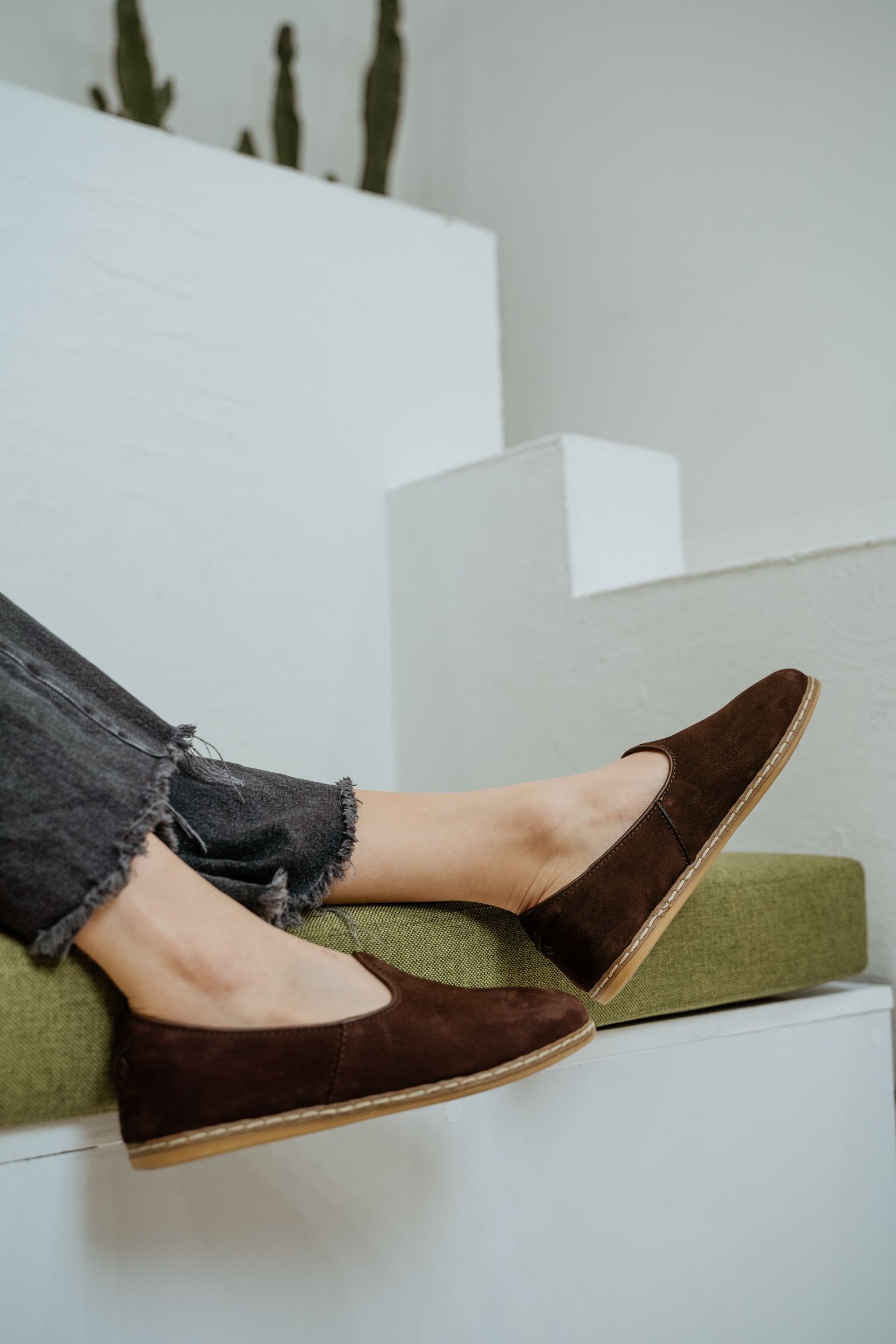
Loafers and pants can look different together when the hem changes, even if both pieces remain the same color. Try the actual pair and trouser length before choosing the outfit for a walking day or another outing. Keep personal comfort and appropriate footwear needs central. The hem comparison is a styling and practical check, not a universal rule about how much ankle should be visible. A useful combination should suit your preferences and real activities without asking the shoes to solve every part of the outfit.
Choose the trousers for the actual day
Try the pair with the top and relevant layers, checking your comfort while standing and sitting. Follow care guidance and account for any personal needs. Avoid choosing pants solely because their hem appears to match the shoes in a photograph. The whole garment needs a clear role. If the waistband or movement is unresolved, address that before focusing on the lower edge. A comfortable base gives the loafer comparison meaning, rather than turning one decorative proportion into the only measure of whether the outfit works.
Use the particular loafers
Put on the actual shoes with the socks or other appropriate items intended for use. Follow their instructions and seek suitable personal guidance where relevant. Do not assume a style name establishes comfort, fit or performance across different models. Read current product information if shopping. The relevant pair may have a different sole or shape from another familiar loafer, and those details can affect the combination. Keep the product's actual suitability separate from the visual decision about how it works with the trousers.
Check the hem through ordinary movement
Walk and sit within your comfort and ability, noticing how the hem behaves with the shoes. Keep the environment and any fitting conditions appropriate. Avoid forcing a tuck, roll or alteration simply to copy a saved image. If an adjustment is being considered, follow garment guidance and seek an appropriate professional assessment where needed. The useful length is one you can wear for the actual day. It does not need to remain visually identical in every seated and standing position to be a successful choice.
Compare one alternative at a time
If the combination feels unresolved, try another suitable trouser pair or another appropriate shoe already owned. Change one element so you can tell which detail made the difference. Avoid buying a new accessory before clarifying the actual issue. A practical wardrobe can contain several hem-and-shoe pairings for different roles. One loafer does not have to work with every pair of pants, and one trouser length does not need to suit every shoe in the collection to remain useful.
Keep a short note of the successful combination if it helps you repeat it. Include the real trousers and footwear rather than only the phrase loafers with cropped pants. If purchasing, confirm current details and applicable terms directly with the retailer. The hem check supports a specific outfit decision grounded in your clothes and personal comfort. It makes the combination easier to retrieve for another appropriate day, without turning a preference about proportions into a rule that other wardrobes or bodies must follow.
Continue planning with Loafers or Ballet Flats: Which Fits Your Week Better?, How to Match Shoe Proportions to Wide-Leg Trousers.