You have a pair of sneakers for weekends and something dressier for events. The missing shoe is the one you can put on for an ordinary Tuesday: a commute, several hours at a desk, a lunchtime errand and perhaps dinner afterward. Loafers and ballet flats both occupy that space, but their usefulness depends on the clothes and routes already in your week.
Before browsing, put three frequently worn outfits on the bed. Include the trousers with the trickiest hem, your usual jeans and a skirt or dress if you wear one. An everyday shoe should work with these pieces without requiring several additional purchases. A beautiful pair that only suits an imagined wardrobe belongs in a different shopping conversation.
Compare the shape with your clothes
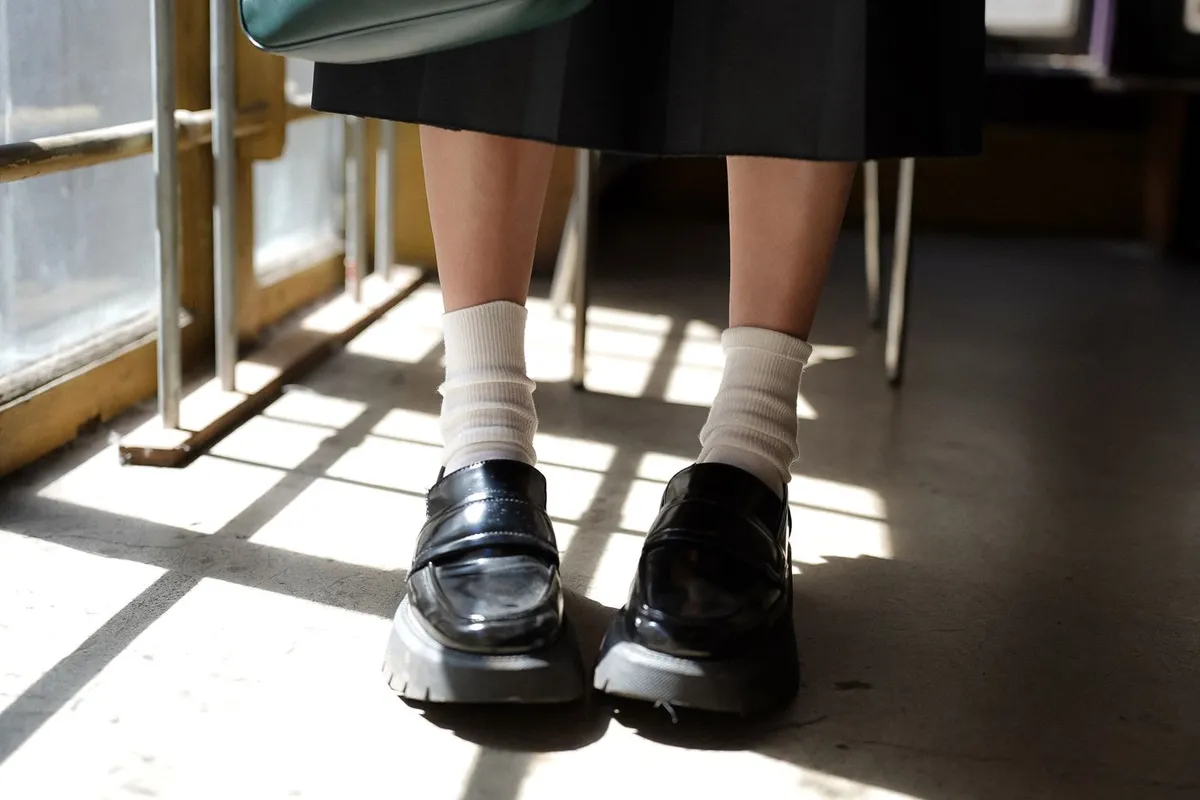
A loafer brings a more substantial outline to the foot. Its vamp usually covers more of the upper foot, and a thicker sole can balance straight jeans or wider trousers. That visual weight is useful when a very delicate shoe seems lost beneath a long hem. However, a particularly chunky style can look awkward with cropped, narrow trousers if that contrast is not what you want.
A ballet flat gives a lighter finish to a midi skirt or ankle-length trouser. A lower vamp may show more foot, changing the proportion of the outfit even when both shoes are flat. Compare round, almond and squared toes using the same outfit. There is no universal winner; the details determine whether the result feels tidy, delicate or deliberately contrasting.
| Your ordinary situation | A useful starting point | What to inspect |
|---|---|---|
| Office trousers and a structured coat | A moderate-soled loafer | Hem clearance and weight |
| A skirt and a compact cardigan | A ballet flat | Heel hold and vamp position |
| Jeans followed by dinner | Either shape in a simple finish | Fit with your exact jeans |
| Wet pavements on the commute | A separate weather-suitable option | Manufacturer’s stated suitability |
Try the pair as you will wear it
Try shoes with the socks or tights you actually plan to use. Thick socks can change a loafer’s fit considerably, while a flat bought for bare feet may sit differently over tights. On a clean indoor surface, stand, take several steps and turn around. Notice whether your heel lifts, your toes feel crowded or a seam presses against the foot.
Do not buy an uncomfortable pair solely on an assumption that it will stretch into the correct shape. Materials, linings and construction vary. Ask the retailer about the particular style and read the return conditions before taking shoes outside. If you need to add an insole, check the fit with it rather than treating it as a guaranteed solution afterward.
Buying checklist
- Compare the size guidance for the actual style, including width information where available.
- Inspect the sole and the retailer’s description of its material; a smooth-looking sole deserves particular attention for your intended route.
- Check the edge around the heel, toe seams and decorative hardware during an indoor try-on.
- Confirm that both shoes stay on when you walk at an ordinary pace.
- Read care instructions before choosing a delicate pale finish for daily use.
- Note the return window, condition requirements and any final-sale restriction before paying.
Start a shortlist with established retailers such as Nordstrom and Everlane, then compare individual listings rather than assuming every shoe from one store shares a fit. Save the product description alongside your shortlist so you can distinguish a preference for the silhouette from evidence about the particular pair.
Tradeoffs
A heavier loafer may make an outfit feel more grounded, but its weight and coverage can be less appealing in warm weather. A light ballet flat is easy to pack, yet its low-cut shape may not suit your preferred socks or a rainy commute. Neither silhouette automatically establishes suitability for a long walking day.
Color presents another compromise. Black often works with office clothes already containing black accessories. Brown can connect cream trousers and warmer outerwear. A bright flat creates a focal point, but check that you want that focal point in several outfits before making it your only everyday pair.
Two questions before checkout
Should I buy both? Only if they solve different, frequent situations. If both would accompany the same jeans twice a month, one carefully chosen pair may be enough.
Can one pair cover the entire year? That depends on your climate and plans. Choose for the season and routes in front of you, and retain another option for weather or occasions outside the pair’s stated purpose. The best purchase fills a real gap without asking you to redesign the rest of your week.