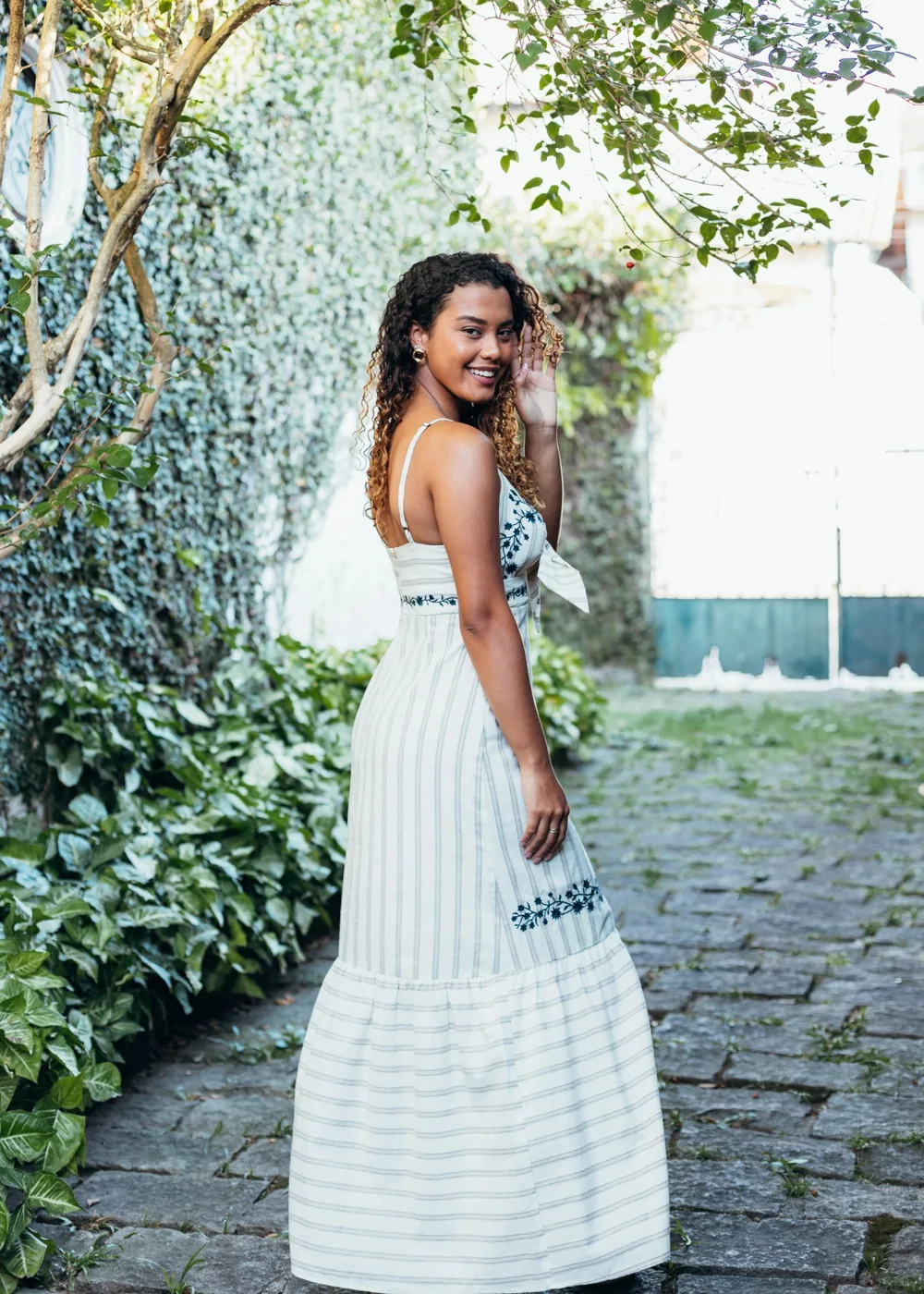
A long dress can have a beautiful still shape and still raise questions about the day you plan to wear it. The relevant check is not how dramatically it moves in a photograph. It is whether you can walk, sit and manage the ordinary transitions of your occasion with a level of attention you find reasonable. Start with the actual route and activities rather than a general idea of elegance.
Put the whole combination together
Try the dress with the shoes and underlayers you intend to use. A different shoe can change where the hem meets the ground, so a barefoot fitting may leave an important question unanswered. Add any belt or fastening that belongs to the planned arrangement. Let the fabric settle naturally before deciding what its length or shape is doing.
Walk a normal distance on a clear, familiar surface. Turn and stop, then sit and stand again. Notice whether you repeatedly gather the fabric or change your stride. Some people are happy to manage a full skirt carefully for an occasion; others prefer a dress they can largely leave alone. Use your own intended level of involvement as part of the decision.
Consider the route without staging extremes
Name the parts of the day that matter: a short outdoor walk, a seated meal or a change between transport and venue. Check what you can reasonably assess at home, and leave unknown conditions as questions. There is no need to imitate every staircase or pavement. If the route itself is uncertain, choosing a more manageable garment may be easier than planning around a sequence you cannot confirm.
Add the outer layer and bag. A coat can alter how the skirt hangs or make it harder to see the hem as you move. Practise putting on and removing the layer while holding the bag you intend to carry. These are small transitions, but they reveal whether the complete combination has practical gaps that a dress-only fitting would miss.
Make the decision specific
If something feels awkward, describe the movement that produces it. The hem catches under this shoe when I turn is more useful than the dress feels wrong. You can then compare another shoe, another dress length or a different outfit with the same movement. Change one element at a time so that you know what improved the experience.
Keep any alteration question separate from a confirmed solution. A hoped-for change is not the same as a finished garment you have tried. If you seek professional advice, take the intended shoes and explain the actual use. Before the occasion, repeat the simple check with the final combination. The aim is a dress that suits both the visual feeling you want and the ordinary movements required to enjoy wearing it.
Related reading
Buying Occasionwear When You Want to Wear It Twice, Give a Sleeveless Dress a Clear Layering Plan.