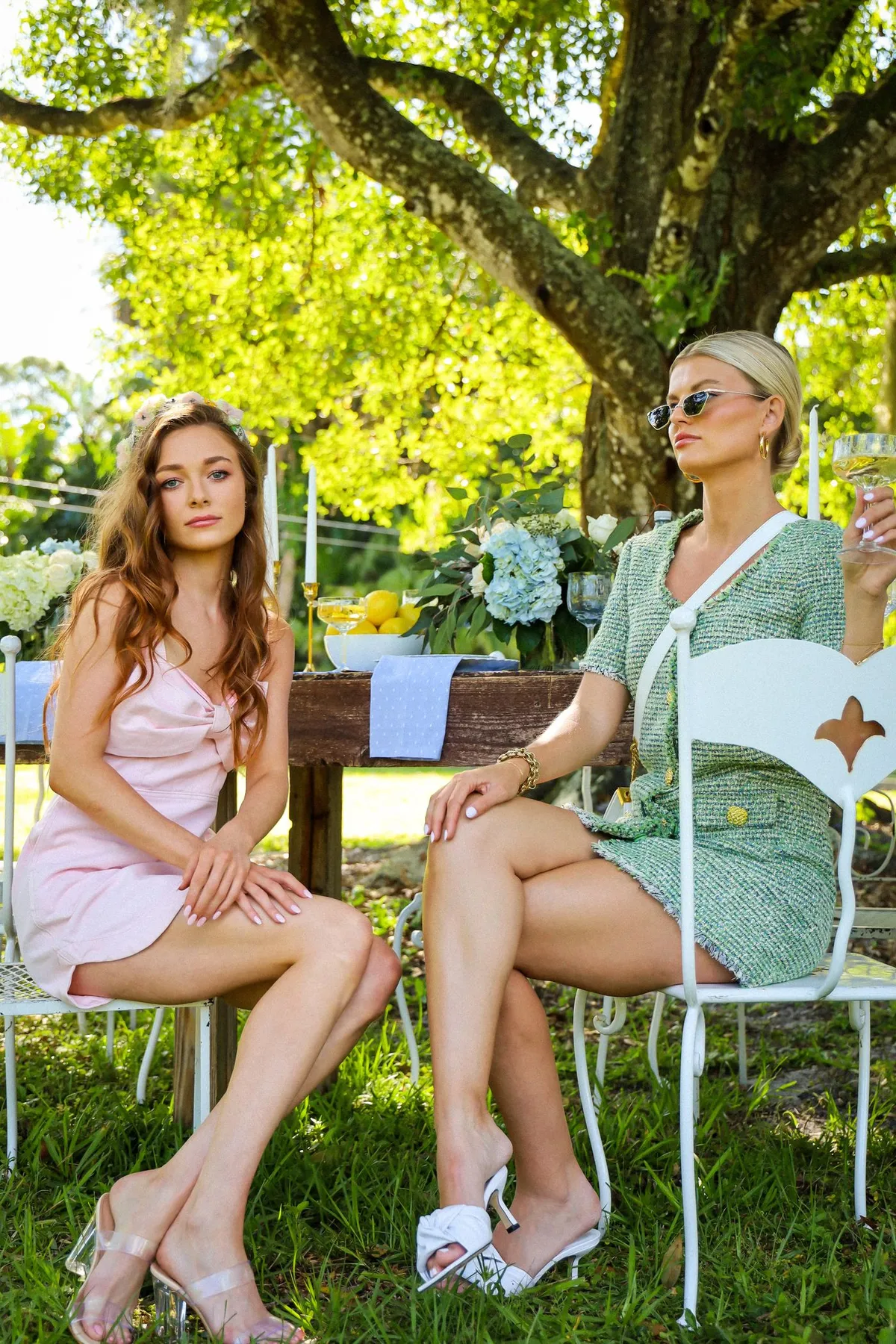
An invitation arrives for an afternoon wedding, followed by plans for a birthday dinner a month later. Buying one outfit for both sounds sensible, but the two events may ask very different things of your clothes. Before browsing, write down the dress code, location, likely temperature and amount of walking for each occasion. Rewearing works best when the garment suits both settings without a complicated rescue plan.
Do not begin with the idea that a neutral dress is automatically the answer. A printed dress, a trouser outfit or separates can be just as repeatable if they fit your life. The useful question is whether you can name the second occasion now, using accessories and layers you already own.
Plan the second outfit first
Start with the less formal event. Could the dress work with flats and a cardigan? Could the skirt pair with a plain knit for dinner? Would the trousers become part of your work wardrobe? Build that combination before adding the more celebratory shoes or jewelry for the first event.
This exercise reveals hidden costs. A dress that requires a new bra, a special slip, alterations and different shoes is not necessarily a poor choice, but those purchases belong in its budget. Include garment care and transport, too. Something that needs careful steaming after every journey may be inconvenient for celebrations reached by train.
Think about the hours between photographs
Occasionwear is often presented while someone stands perfectly still. Your evening may involve a seated meal, stairs, a long reception and a walk back to the hotel. Try those movements at home within the retailer’s return conditions. Check whether straps stay comfortable, a neckline feels secure and the hem allows a normal stride.
Consider the layer you will actually carry. A jacket should fit over the sleeves without crushing them; a wrap needs a practical place when you sit down. If the event is outside, footwear and the ground surface matter as much as the garment. A beautifully coordinated outfit loses its usefulness if you cannot comfortably reach the venue.
Buying checklist
- Confirm the host’s dress code and any specific cultural or venue expectations.
- Name two real occasions and make a complete outfit for each.
- Check fabric composition, lining, care requirements and opacity in ordinary light.
- Test sitting, reaching and walking without changing the garment’s condition.
- Add footwear, underwear, alterations and cleaning to the total budget.
- Check the return deadline against the event date and leave time for adjustments.
You can browse occasion categories at Nordstrom and compare simpler separates at Uniqlo. These are starting points for comparison, not promises that any particular item meets a dress code. Read each listing’s measurements and materials, then judge the complete outfit against your invitation.
Tradeoffs
Separates often offer more combinations, but coordinating two pieces can demand more effort than choosing one dress. A striking print may feel memorable, yet that does not prevent rewearing it. If you enjoy the piece, repeating it confidently is more sustainable for your budget than buying an anonymous option you never choose again.
Very formal garments may have fewer everyday uses. That can still be appropriate when the first occasion genuinely requires them. Compare buying with borrowing, renting or wearing an existing outfit. With rentals, review delivery timing, fit options, cleaning rules and charges before deciding they are the simpler route.
Avoid counting imaginary future events to justify an expensive purchase. Two confirmed uses are more helpful than a vague promise to wear something frequently. After the first event, clean and store the garment according to its label rather than leaving it in a travel bag. Keeping it ready makes the second wear an easy decision, which is the practical benefit you were shopping for in the first place.