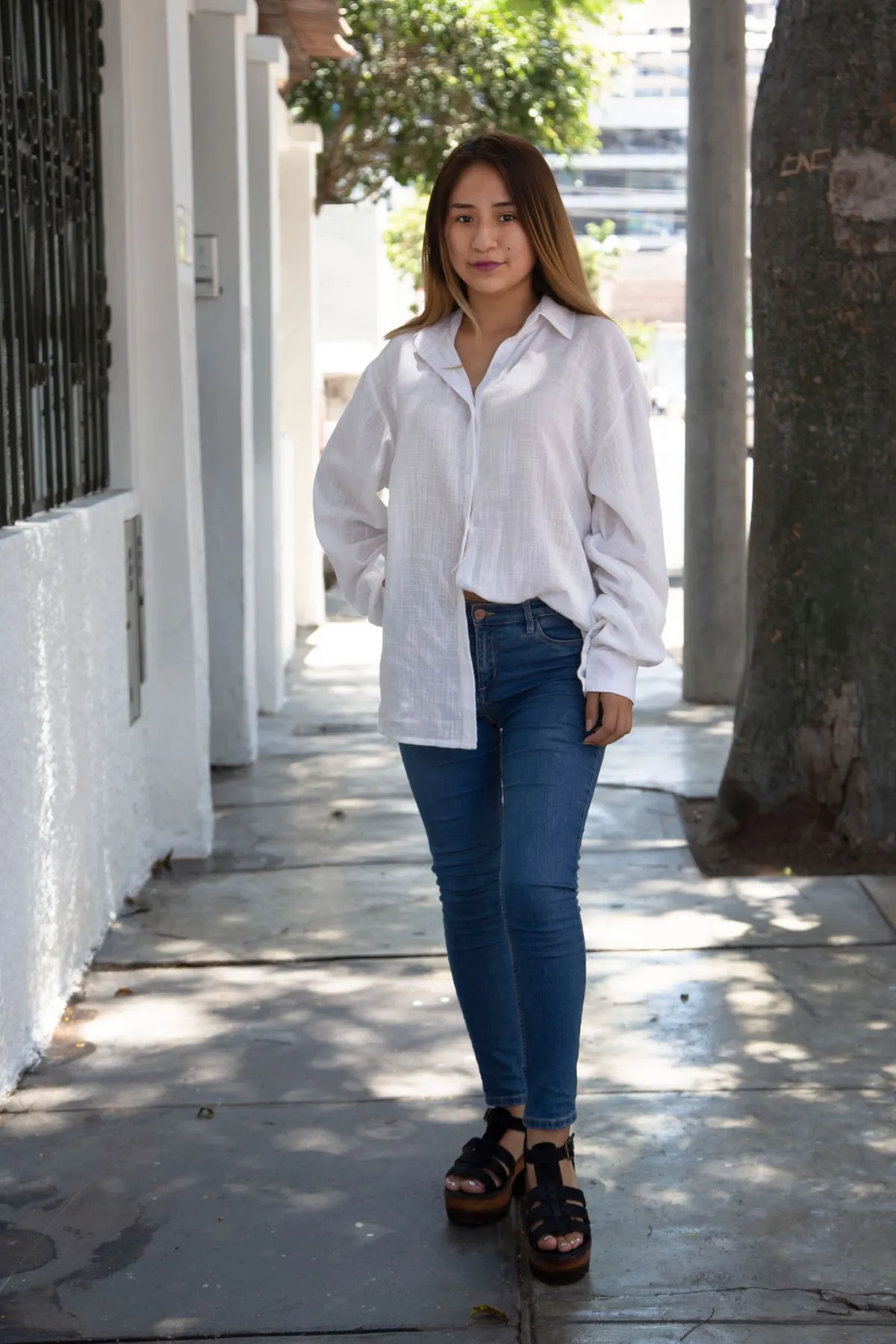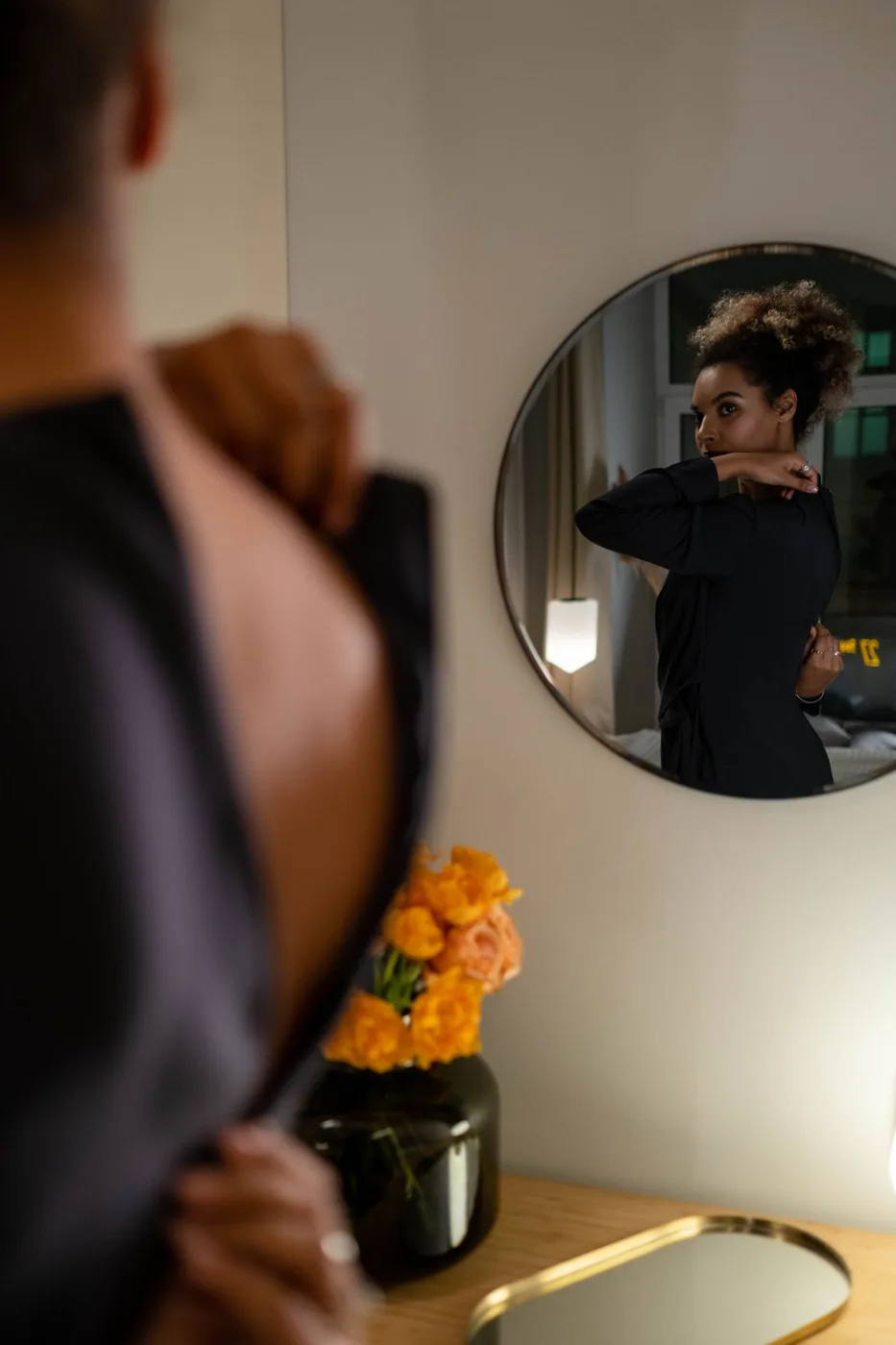
A buttoned blouse can look settled while you stand and behave differently once you sit at a table. The front may pull, bunch or move away from the body, depending on its cut, fabric and the way it is tucked. A seated check helps you judge the blouse as part of an ordinary day. It also keeps a temporary styling adjustment from disguising a question that will return whenever you move.
Begin with the intended outfit
Put on the trousers or skirt you expect to wear with the blouse. Fasten the buttons you intend to use and arrange any tuck as you normally would. Let the garment settle without repeatedly pulling its front down. Observe the line of the placket, the spacing between buttons and the amount of fabric gathered above the waistband. This is your starting view, not the final verdict.
Sit in a normal chair at an ordinary table height. Notice whether the front changes in a way that feels uncomfortable or exposes more than you want. Lean forward slightly, return upright and reach for an object across the table. You are checking common movements rather than stretching the garment to an extreme. A blouse meant for desk work should make sense in those positions as well as in a standing photograph.
Separate the possible causes
If the front pulls, try releasing the tuck and repeat the movement. Fabric caught at the waistband can create a different problem from limited room through the chest. If the untucked blouse settles comfortably, reconsider how much material you tuck or whether this waistband works with it. If the same tension remains, the combination may need a different fit rather than more elaborate arranging.
Add the jacket you plan to wear over it. Check whether its sleeves or armholes drag the blouse backwards when you reach. Then remove the jacket and compare. This simple sequence helps you identify whether the blouse itself is the difficulty or whether the two layers interfere. Keep the observation specific: the placket moves under this jacket, for example, rather than concluding that all buttoned tops are unsuitable.
Keep a useful decision
Judge the result according to your own comfort and coverage preferences. There is no need to force a blouse into a perfectly flat front if its intended shape is soft or gathered. Equally, you do not have to accept repeated pulling just because a standing mirror view looks good. The movement check gives you information to use when choosing another size, another cut or another outfit pairing.
Record the successful arrangement, including the waistband and jacket if they made a difference. If you are considering a purchase, keep the unresolved issue visible until it is answered. Avoid relying on an improvised pin or an unplanned alteration as proof that the original blouse fits your purpose. Choose the version you can wear through the actual seated part of your day with reasonable ease.
Related reading
What to Wear to a Casual Office When Jeans Are Allowed, Include the Back View in an Ordinary Clothing Fit Check.