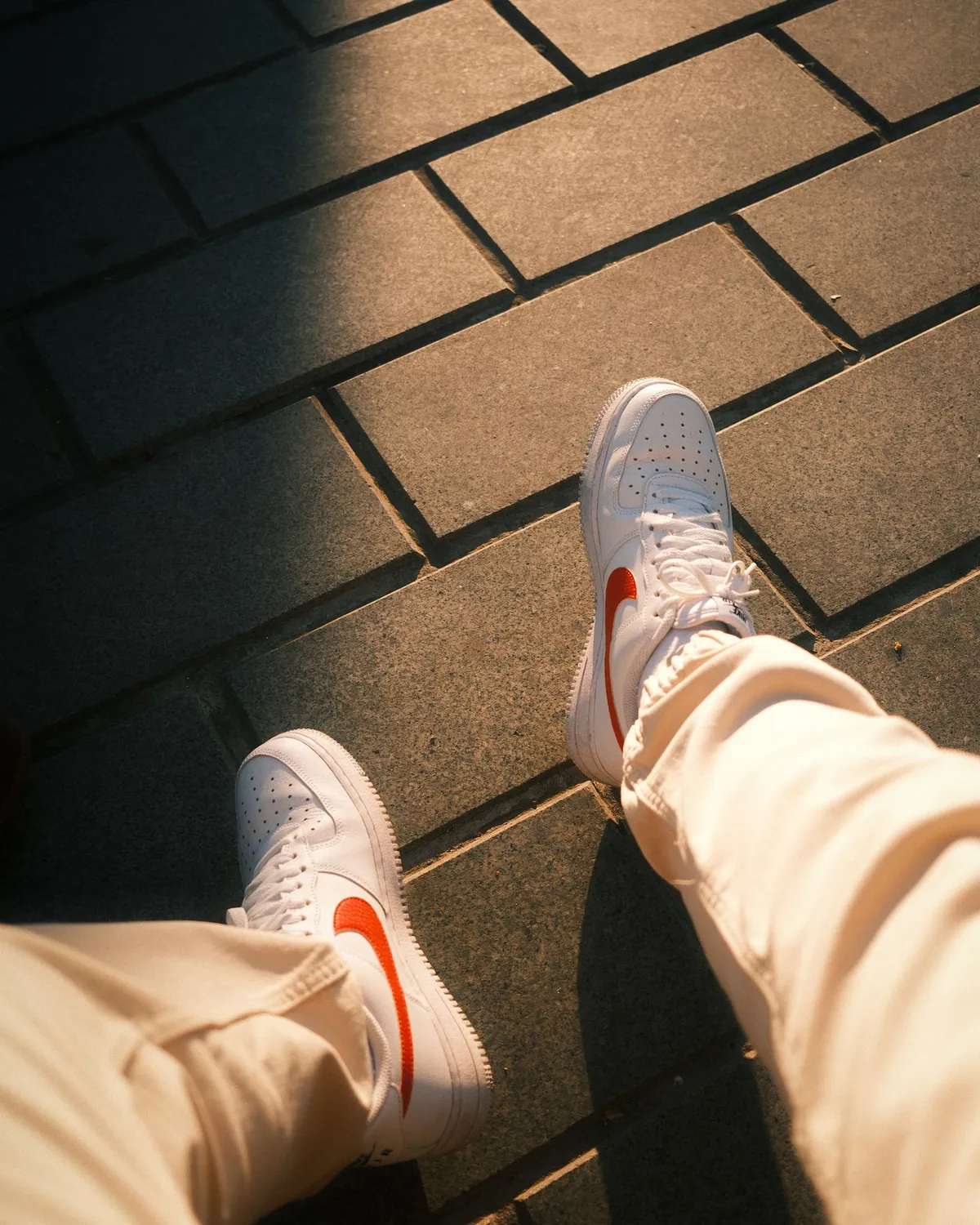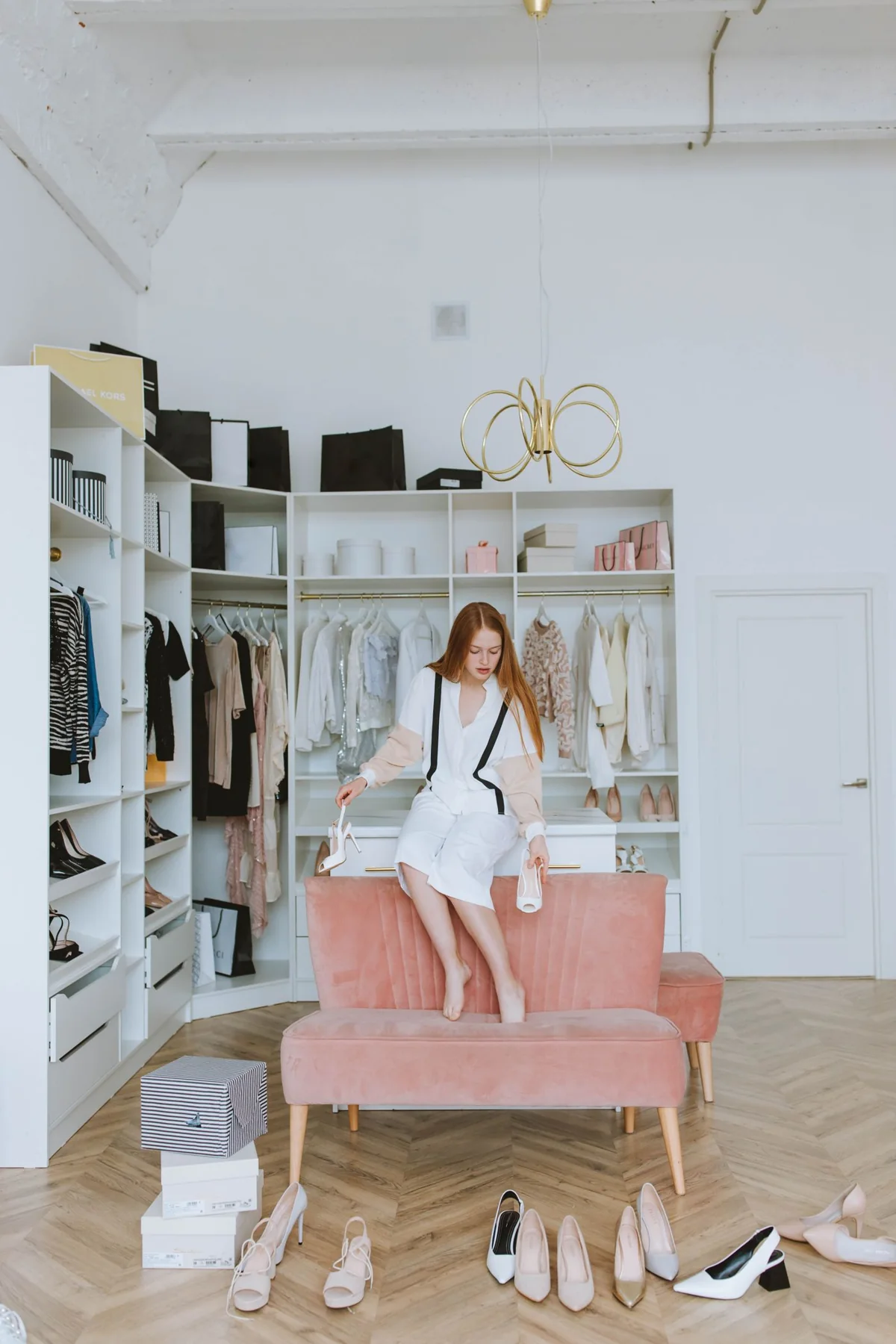
Shoes are often the last part of an outfit to go on, which makes their fastening easy to overlook during planning. A pair of trainers may work visually with the trousers while requiring a different departure routine from slip-on shoes. Including that routine in a trial can reveal a simple practical need: a clear seat, a little more time or a different way to arrange the hem while you tie the laces.
Try the complete lower half
Wear the trousers, socks and shoes you intend to use. Fasten the shoes in the way you normally would, without judging the outfit only with the laces left loose. Notice where the trouser hem sits while you are seated or bending, and where it falls once you stand. A photograph of an untied shoe cannot answer the same question as the finished combination.
Use a stable, appropriate place for putting the shoes on. If your ordinary entrance has nowhere to sit and you prefer sitting to fasten this pair, that is useful information for the plan. You may choose to put the shoes on in another room before collecting your coat. The outfit does not need to dictate a difficult movement simply because you usually leave footwear at the door.
Check the hem after fastening
Stand and walk a short distance. Look at whether the hem rests on the shoe as you expected or stays caught in the position created while you tied it. Smooth it once if needed and see whether the arrangement remains comfortable during ordinary movement. This separates a brief dressing adjustment from an ongoing problem with the pairing.
If you change the hem arrangement, compare both versions with the same fastening sequence. A cuff can alter how much material gathers near the shoe, while a longer unrolled hem may behave differently when you sit. Choose the version you actually want to wear, rather than the one that looks neat only when carefully held in place for a mirror view.
Connect the choice to departure
Walk through the final steps of leaving home with the planned bag and outer layer. Decide when the shoes go on and where the remaining items will be collected. If you need to remove the shoes again at another point in the day, consider whether the same routine will be convenient there. Keep that as a practical preference, without expecting a photograph or product description to tell you how the shoes will work for your own movements.
Save a useful pairing with a short note about the socks and hem. If the outfit is otherwise reliable, a small change to the departure routine may be all it needs. When choosing another shoe pair, include fastening among the ordinary details you compare. The best-looking option becomes much more useful when getting it onto your feet fits comfortably into the day you have planned.
Related reading
White Sneakers: What to Check Beyond the Shape, Name the Wardrobe Gap before Shopping for Another Shoe Pair.