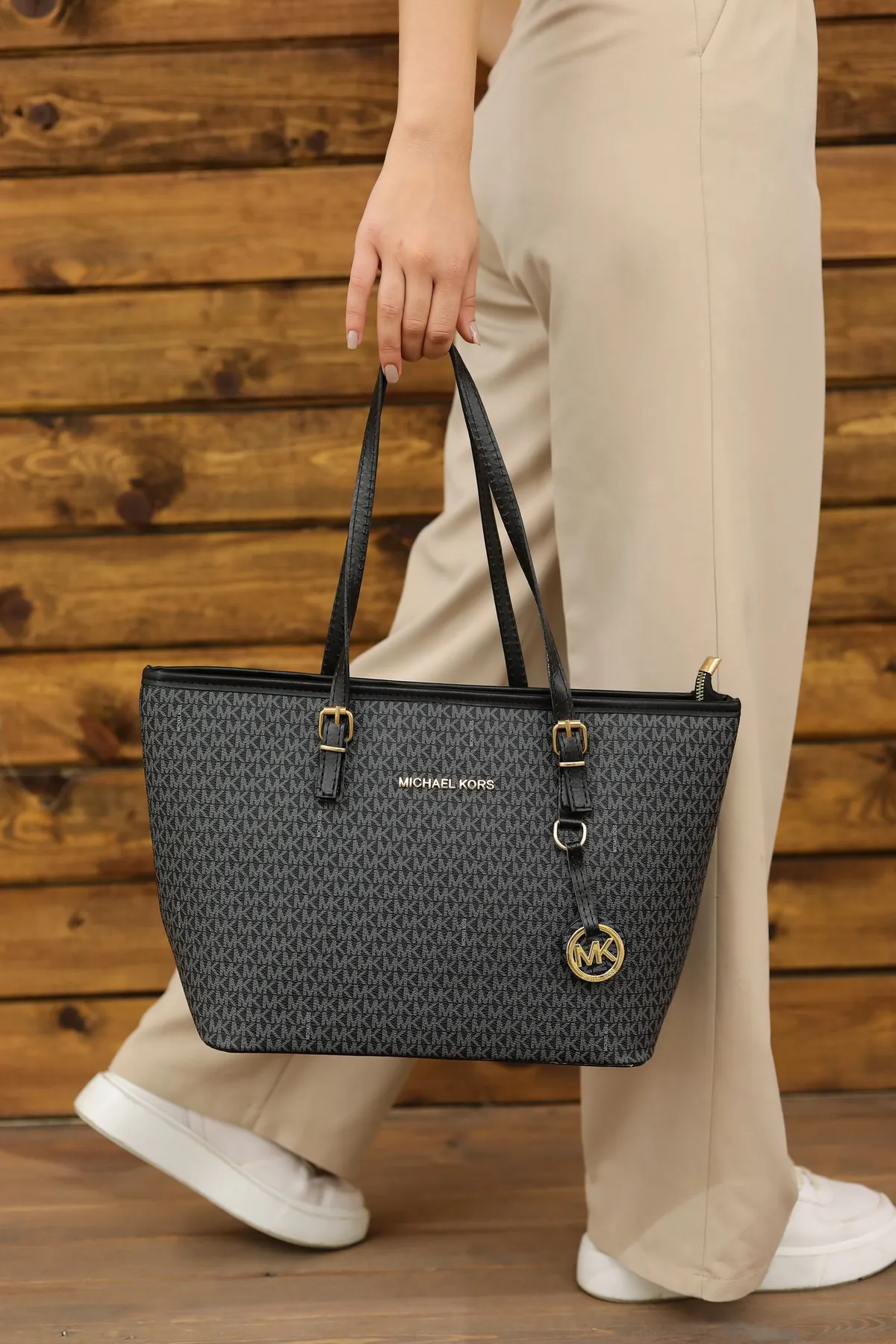
The right work tote begins with the things on your kitchen table at seven in the morning: a laptop, its charger, a notebook, lunch, keys and the small items you would otherwise move between coat pockets. Before choosing a color, assemble that normal load. The bag should accommodate your actual working day without turning every commute into a packing puzzle.
Include the laptop’s sleeve if you use one. A listing that says a bag fits a particular screen size is a useful clue, but laptops with the same advertised screen size can have different outer dimensions. Measure the device and sleeve, then compare them with the bag’s usable opening and internal measurements where those are provided.
Capacity is more than the exterior width
A tote can appear generous yet have an opening narrowed by a zip, folded sides or a rigid frame. Look for photographs showing the bag open and occupied. If the listing provides only external dimensions, ask the retailer about the usable compartment rather than assuming those measurements describe laptop space.
Think about the vertical arrangement as well. A bottle standing beside a device takes a different amount of space from one laid across the bottom. A lunch container may fit comfortably on its own but distort the bag once a notebook is added. You can make a rough paper outline of the published dimensions to visualize the footprint before ordering.
Match the straps to your outerwear
Handle drop matters when you wear a thick coat. Compare the stated measurement with a bag you can already carry over that coat. A strap that works over a thin shirt can be awkward in winter, and a very long strap may let the tote hang where you do not want it when carrying by hand.
If trying in a store, ask whether you may put your ordinary belongings inside. Lift the bag, put it over your shoulder and sit with it beside you. An empty tote does not reveal how the straps and base behave under a normal load. Consider whether you regularly need a free hand for a rail, umbrella or coffee; a backpack or different strap arrangement may better suit that particular commute.
| Commute detail | Feature to investigate | Question before buying |
|---|---|---|
| A crowded train | A closure that you will use | Can you reach essentials without opening everything? |
| A heavy winter coat | Adequate handle drop | Does it sit comfortably over the coat? |
| Laptop and lunch together | Divided usable space | Will containers sit beside the sleeve? |
| Frequent changes of desk | Stable base and organization | Can you find the charger quickly? |
Buying checklist
- Measure the laptop, sleeve and largest container you carry.
- Compare both the bag’s dimensions and its opening, not just screen-size compatibility.
- Check handle drop against your usual coat and carrying position.
- Inspect the closure, internal pockets and attachment points in detailed photographs.
- Read the material and care information before choosing a finish for a wet commute.
- Confirm the empty weight if carrying weight is an important concern.
- Review returns and any personalization restrictions before ordering.
Browse Nordstrom for comparisons across shapes and Everlane for another selection of everyday bags, then read each current listing. Keep product-specific facts in your shortlist: dimensions, closure, material and return terms. A retailer photograph styled with a laptop is less useful than measurements that match your own device.
Tradeoffs
A structured tote can keep its shape and make documents easier to retrieve, but structure may add bulk when the bag is partly empty. A soft tote can sit more easily beside you, yet belongings may settle into a pile unless you use pouches. Neither arrangement is automatically superior; choose the inconvenience you are more willing to manage.
Internal organization also has limits. Many fixed pockets sound useful until their sizes do not match your belongings. One roomy compartment with a removable pouch can offer flexibility, while a dedicated laptop section can separate the device from other items. Consider how you pack now instead of buying a new organizational system solely because it appears in the product copy.
Decide what can stay at work
Before upgrading to a larger bag, ask whether a spare charger, mug or notebook can remain at your desk. Removing an unnecessary daily item can make an existing tote more useful. If your workplace has no permanent storage, capacity has to do more work and deserves priority over a slim silhouette.
Does a zip make a tote waterproof? No. Look for specific manufacturer claims about the whole bag rather than inferring them from one fastening.
Should I add a bag organizer? Only after measuring it against the internal compartment. An organizer consumes space as well as dividing it. The best tote leaves enough room for an ordinary workday, with a packing routine you can repeat without effort.