You arrive home carrying a bag, a coat and a parcel. With no obvious place for any of them, the dining chair becomes a temporary wardrobe and the floor collects shoes. A small entryway does not need to store everything you own. It needs to help the things you use today find a predictable place.
Start by watching your arrival routine for a few days. Where do keys land? Which coat stays out? How many shoes are actually in rotation? Those answers will tell you more than a photograph of a spacious hallway filled with matching baskets.
Give the entrance three clear jobs
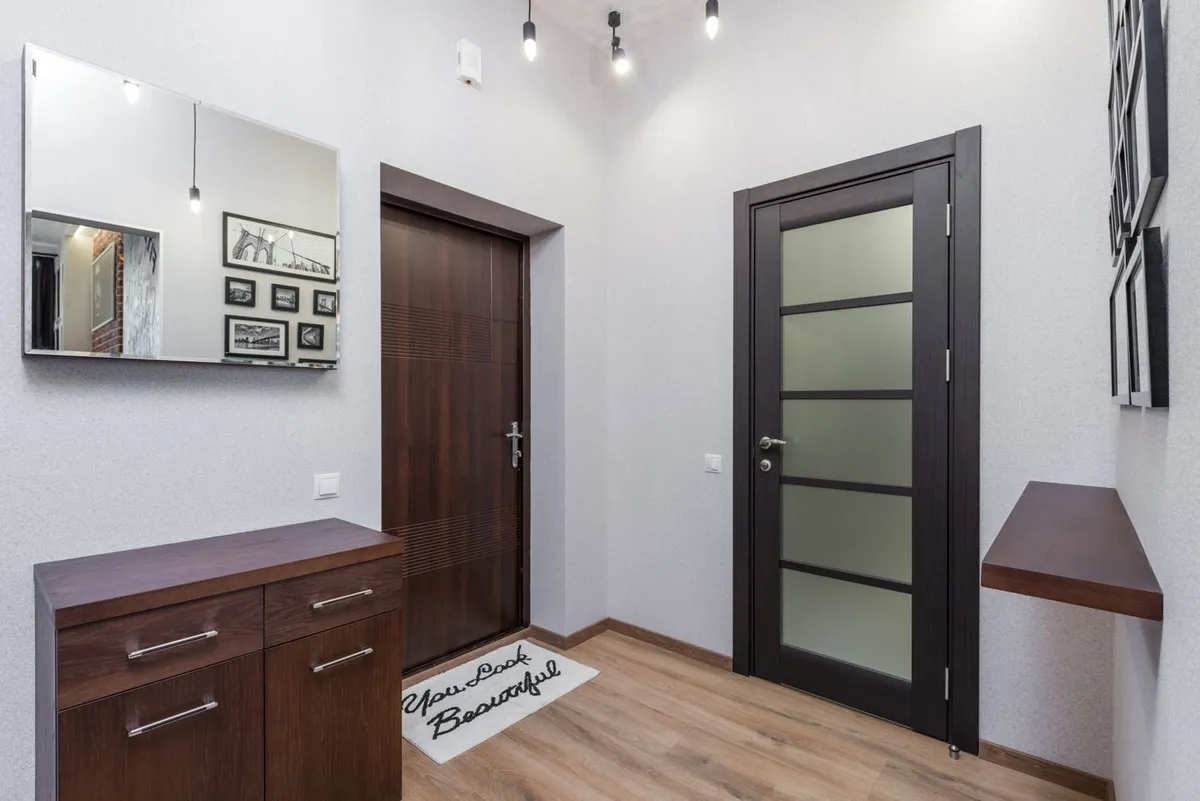
A practical setup usually needs a place for small essentials, somewhere for the current bag and coat, and a limited area for shoes. Separate these functions so that a key tray does not disappear beneath a tote. Keep items you need to retrieve quickly at an accessible height for your household.
If you share the space, decide who uses which hook or shelf. This can be as simple as assigning one position per person. A visible home for each daily bag is often easier to maintain than a large cupboard where everything goes behind the same door.
Do not let the entryway become the main storage location for all seasonal outerwear. Move less-used coats elsewhere when possible. The aim is to make leaving home easier, not to build a dense display of every layer you might eventually wear.
Measure the space with the door open
Measure the usable wall and floor area, then open the entrance door fully. Check cupboard doors, drawers and any other moving parts. A narrow console may fit the wall but still interfere with the route when its drawer is open.
Look at the depth of belongings as well as the furniture. A bag hanging from a hook can protrude farther than an empty product photograph suggests. Leave a clear passage and follow any building or local requirements affecting hallways and exits. If you rent, check the lease or ask the landlord before drilling or making permanent changes.
Use the smallest useful landing surface
A shelf, an existing narrow table or a tray on a nearby cabinet can provide a place for keys. Add only what serves a repeated function. A decorative bowl is useful if you reliably empty your pockets into it; several small containers can create more decisions than they solve.
Place everyday mail or parcels somewhere separate from the essentials. Otherwise yesterday’s paperwork can cover the keys you need this morning. Set a routine for removing items that are only passing through, such as returns or recycling. Storage cannot compensate indefinitely for things that never leave.
Prepare tomorrow without displaying the whole outfit
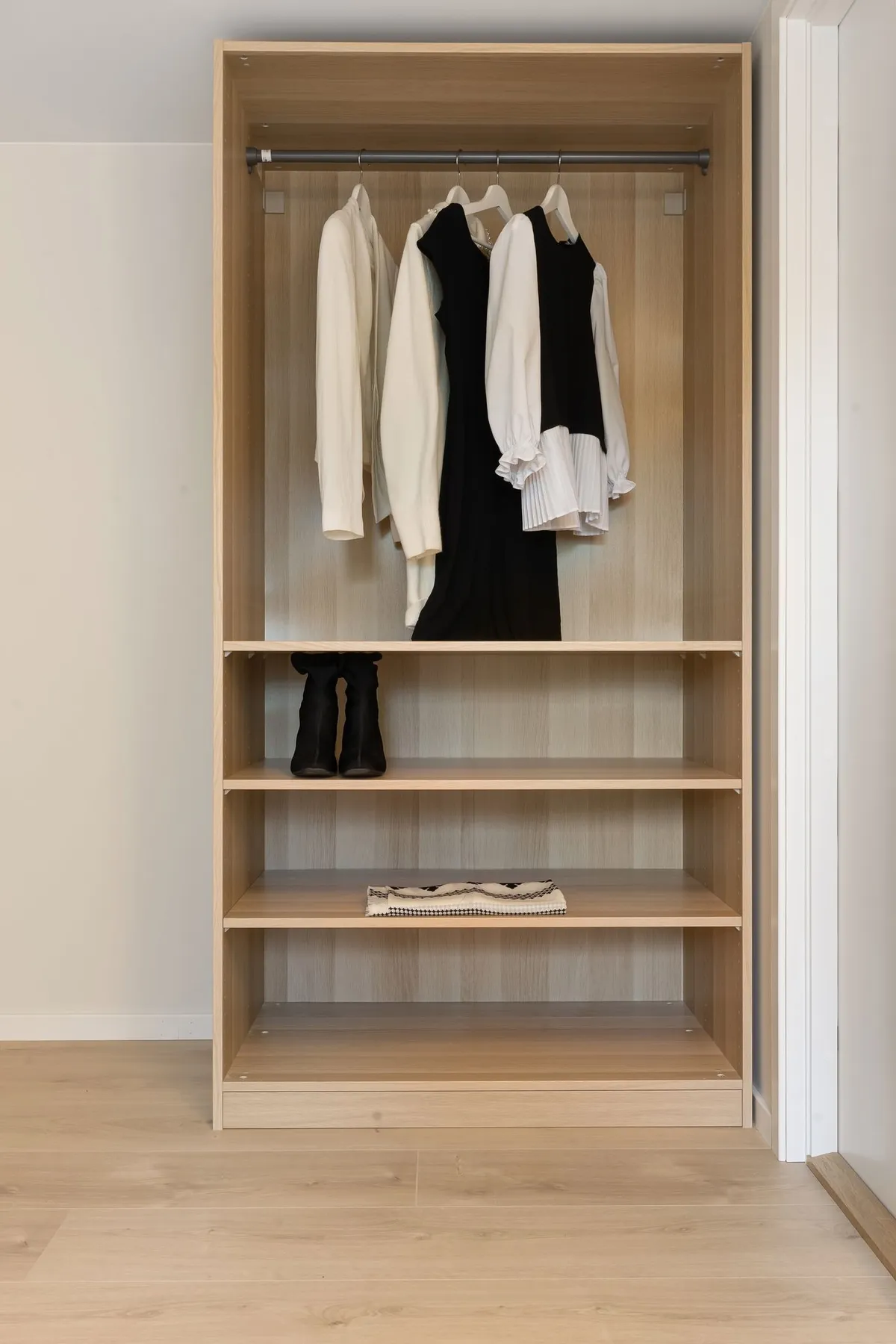
If the entrance is where you leave for work, use one hook for the next day’s outer layer and bag. Put the indoor outfit in the bedroom or closet where you change. That division keeps the entryway functional and avoids draping delicate garments over a crowded rack.
Check the bag before hanging it up: remove food, unpack purchases and return the items you need tomorrow. Put shoes together as a pair rather than scattered along the path. A five-minute reset in the evening can be more effective than buying a larger storage unit.
Buying checklist
- Measure wall width, usable depth and the door’s opening path.
- Check the weight limits and fixing requirements stated by the manufacturer.
- Confirm that shelves or hooks suit the wall type and installation guidance.
- Use existing trays, boxes or furniture before ordering matching accessories.
- Compare internal dimensions with actual bags and shoes, not just product categories.
- Skip a bench if seating is rarely needed and it narrows the passage.
Use the retailer destination below to compare storage dimensions and installation requirements. Do not assume a freestanding unit is safe without checking its supplied instructions; some furniture requires anchoring. Select for your room and household rather than copying a complete showroom arrangement.
Tradeoffs
Open hooks make belongings easy to reach but keep them visible. Closed storage can look calmer but needs enough room for doors and a routine for returning things inside. A bench offers somewhere to sit and occupies floor space that a wall-mounted solution does not.
Choose the compromise you will maintain. An entryway that works on an ordinary rushed morning is more useful than one that looks pristine only when nobody has arrived home. Keep its capacity small enough that it encourages a reset instead of becoming another place for things to disappear.