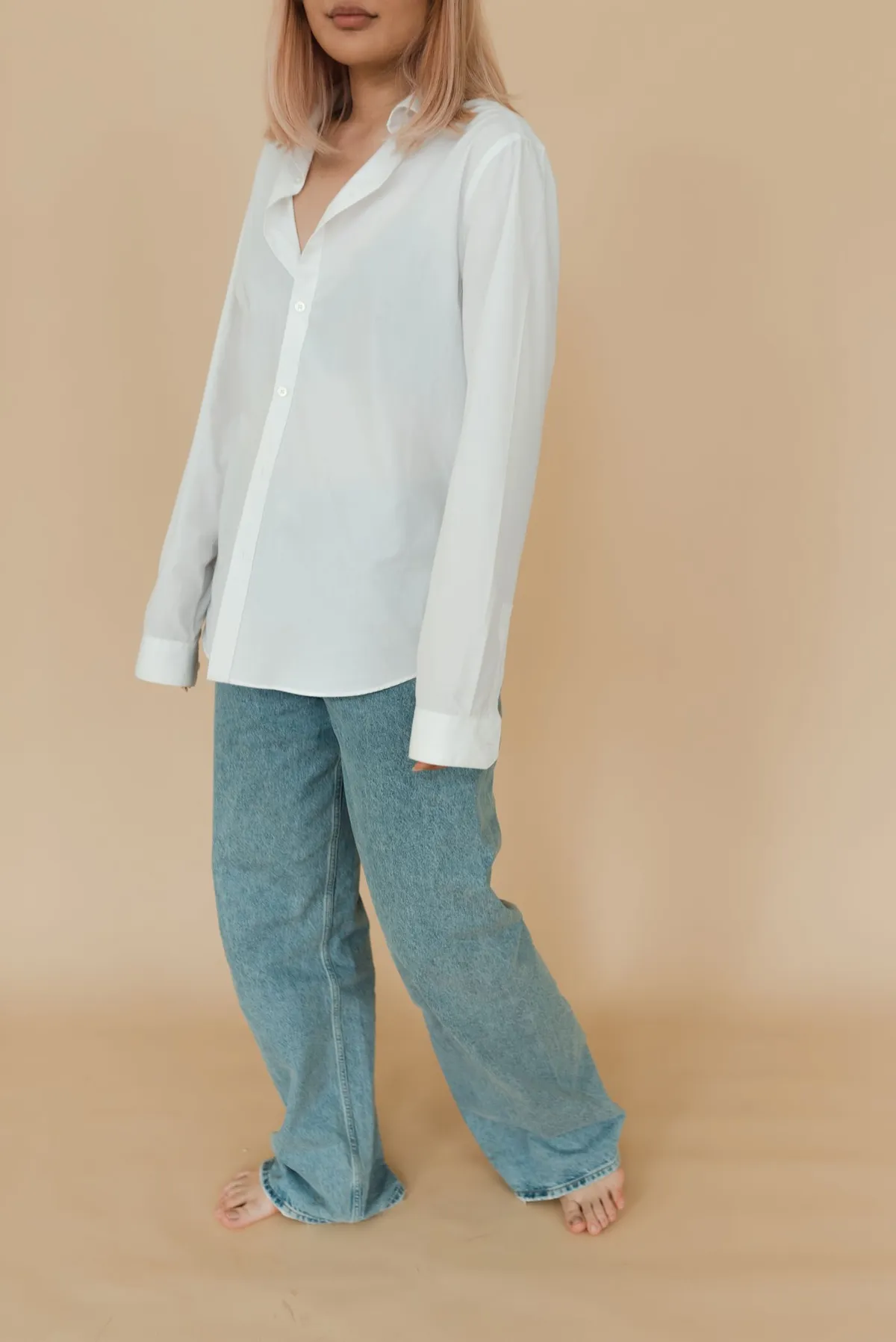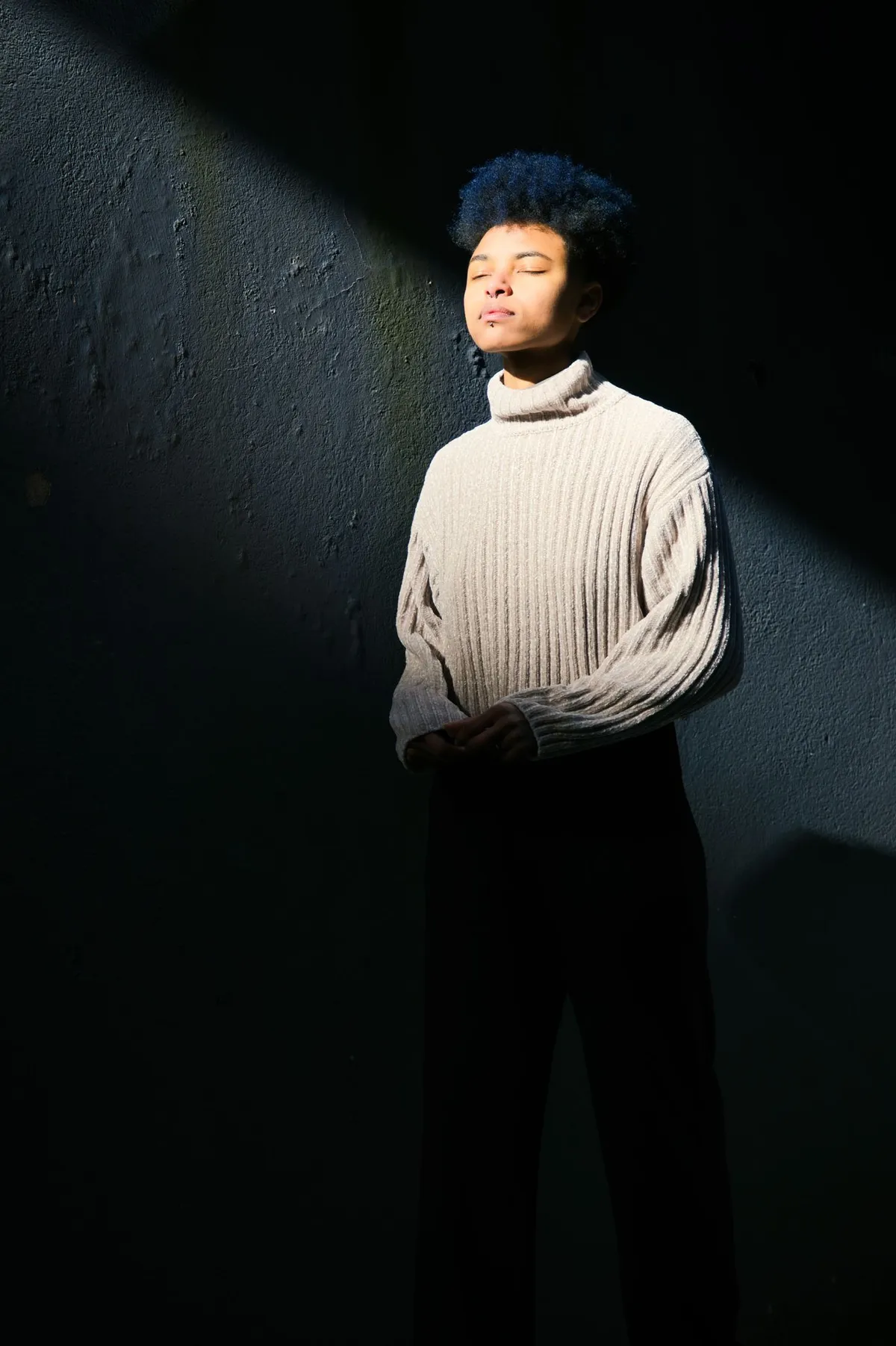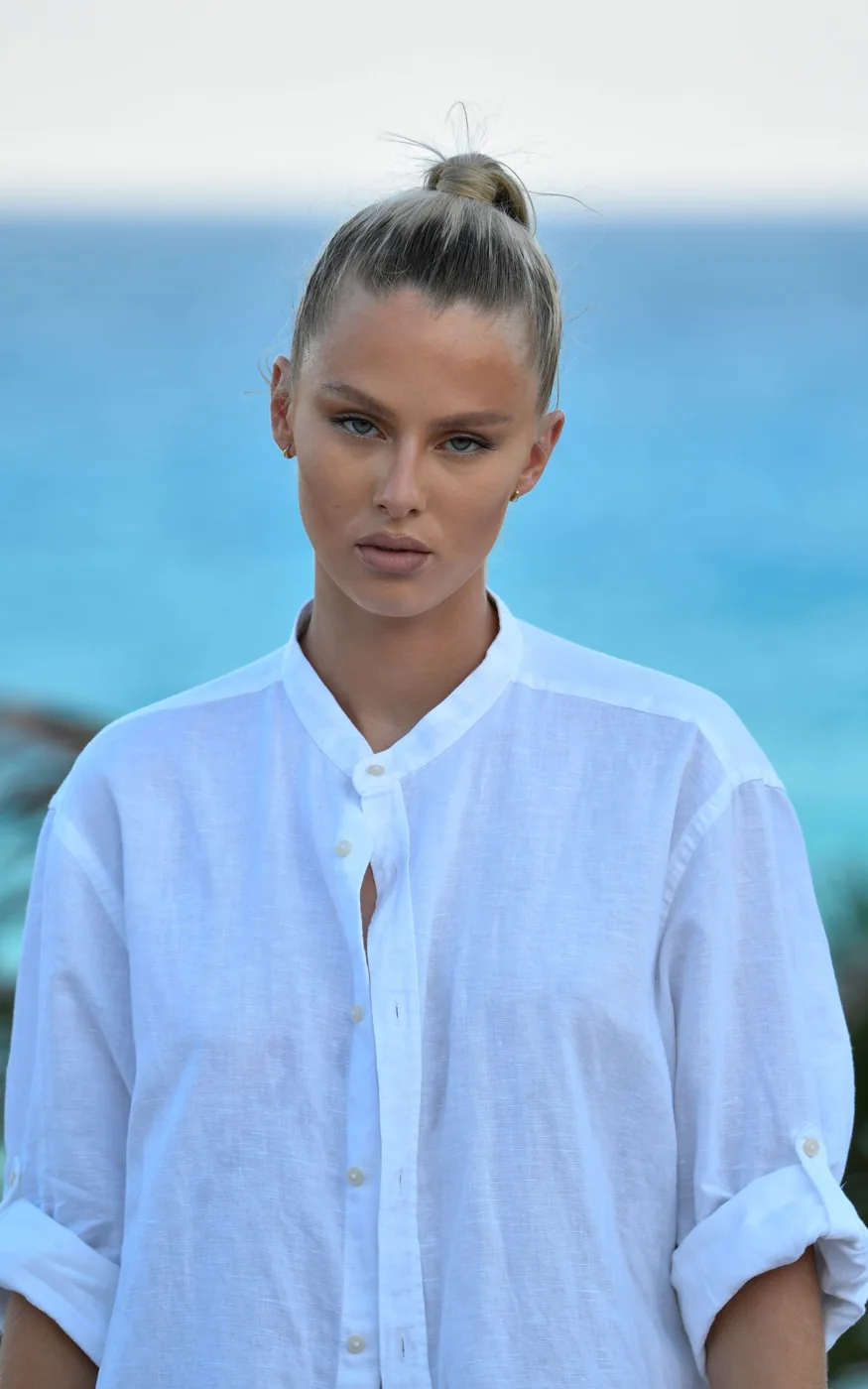
A white shirt can be plain in colour and still have a strong point of interest at the front. A tie, a band collar, a button line or a softly open neckline may be enough to set the outfit's direction. Begin by noticing the detail your particular shirt already offers. You can then choose supporting pieces that give it room instead of automatically adding more decoration.
Identify the detail you want to keep visible
Put on the shirt and fasten or arrange it as you intend to wear it. If it has a tie, decide how loosely or neatly you want that tie to sit. If the interest comes from buttons or a collar, look at the whole front before adding another layer. The useful starting point is the garment's actual shape, not a general assumption that every white shirt needs a necklace or a scarf.
Try the trousers or skirt that will form the rest of the outfit. A tuck can change where the shirt's front detail lands and how much fabric is visible beneath it. Check the arrangement while standing and seated. Choose a position that makes sense for your comfort and the activity, rather than one that requires the front to be repeatedly pulled into a narrow shape.
Add one supporting element
If you want jewellery near the neckline, begin with one piece and see what it contributes. A shirt tie and a pendant may occupy the same area; that could be a deliberate layered effect, or it could feel busier than you wanted. Try the simpler version as a comparison. The point is to see the difference, not to apply a rule that certain details must never appear together.
Add the jacket or cardigan you expect to wear. Look at whether its opening frames the shirt detail, covers it or moves across it when you reach. If the outer layer is only for part of the day, consider both versions of the outfit. You may prefer to keep the shirt front as the main interest and let the layer remain visually quiet.
Keep the arrangement repeatable
Move through a few ordinary actions and allow the shirt to settle. A soft tie or relaxed collar will not hold exactly the same shape in every position. Decide whether you enjoy that natural movement or would rather choose another arrangement. An outfit reference should preserve the way you can actually wear the shirt, including the amount of adjustment you find reasonable.
Record the useful combination by naming the detail and its supporting pieces: tied white neckline with dark trousers and small earrings, for example. That note is more informative than white-shirt outfit. When you wear the shirt again, start with the same focal detail and change one surrounding element if the occasion calls for it. The garment can offer several outfits without needing every available accessory at once.
Related reading
Seven Ways to Make a White Shirt Feel Less Like a Uniform, A Neutral Wardrobe With Enough Color to Feel Like You.