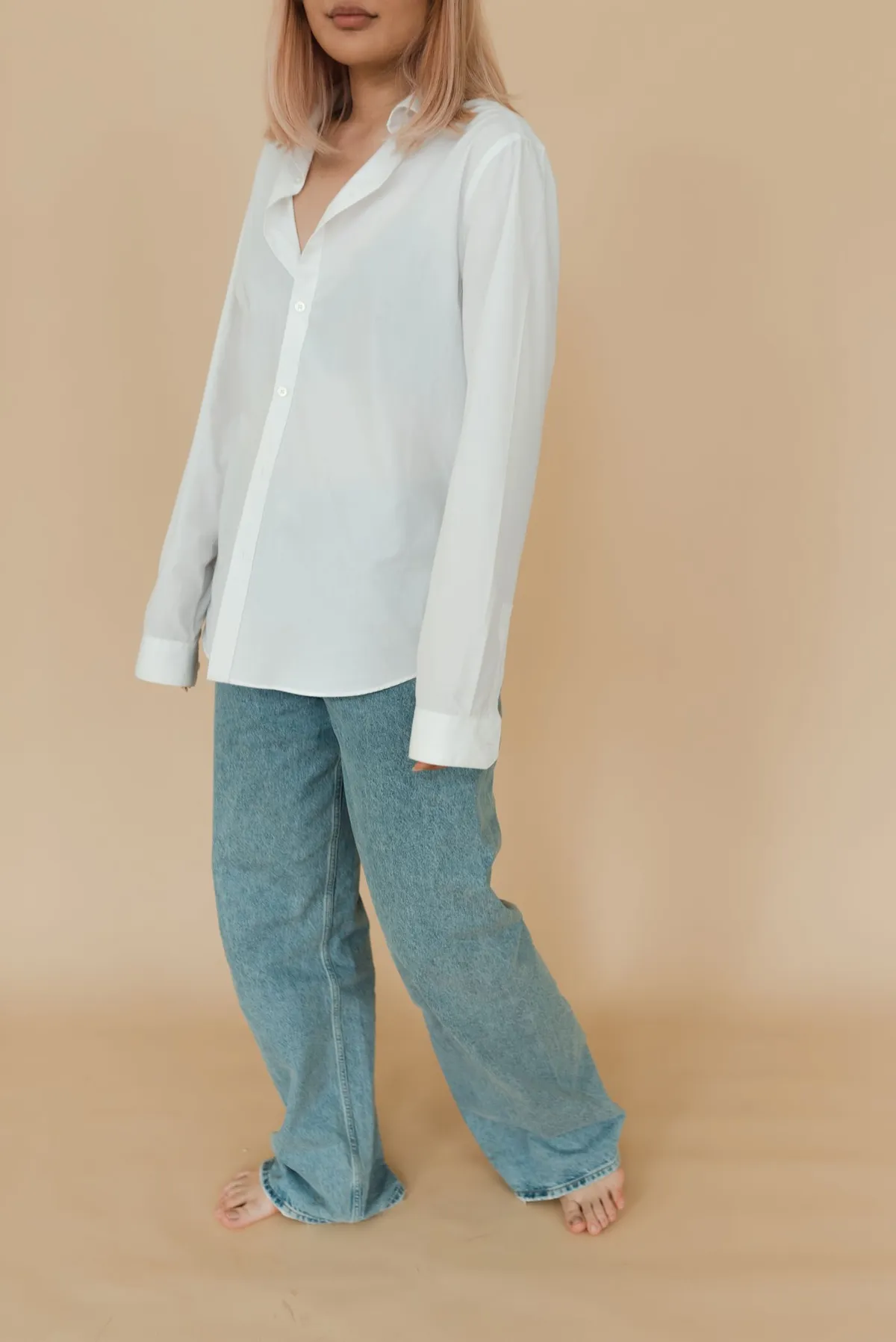
A white shirt is useful precisely because it does not dictate the whole outfit. But when you always wear it with the same trousers and the same tuck, it can start to feel like a uniform you never chose. You do not necessarily need a new shirt. You may need a different proportion, texture or setting.
Start by checking the shirt you own. Does the collar sit comfortably? Can you move your shoulders? Is the fabric sufficiently opaque for the way you want to wear it? These seven combinations assume an everyday button-front shirt that already fits. Adjust them to your own clothes rather than buying seven complete looks.
1. Let straight jeans do the relaxing
Pair the shirt with straight jeans and comfortable flats or loafers. Leave it untucked if the hem is a suitable length, or use a simple full tuck for a more defined waist. Roll the sleeves neatly rather than repeatedly pushing them up. A brown or black belt can add definition if your jeans need one, but it is not a required finishing piece.
2. Wear it open over a simple base
An open shirt over a tee or tank turns a familiar work piece into a light extra layer. Check that the inner neckline feels deliberate and that neither layer bunches under a bag strap. This combination works well for a mild afternoon when you want arm coverage without a heavy jacket. Keep the base comfortable enough to wear if you remove the shirt.
3. Change the trouser shape
Wide-leg trousers give the shirt a different outline from a narrow office cut. Try tucking the shirt, then look at the outfit with your intended shoes. The hem should clear the ground, and the top should not balloon uncomfortably when you sit. If both pieces have generous volume, a clearer tuck may help you feel less overwhelmed by fabric.
4. Add a knit with a different texture
A fine cardigan over the shirt can soften its crispness. A sleeveless knit offers another option if you like seeing the collar and cuffs without adding bulky sleeves. Check the neckline of the knit against the collar; a tight combination can feel crowded. You do not need to display every edge of the shirt for the layers to work.
5. Try a skirt you normally reserve for dinner
Pairing a white shirt with a more dressy skirt can bring the skirt into daytime use. Keep the footwear suited to your plans and let the contrast between the pieces do the work. Tuck carefully around the waistband so the shirt does not create a thick ridge. A slippery skirt fabric may require more adjustment than denim or cotton, so test the combination before a long day.
6. Put color near the face
A colorful scarf or cardigan can change the impression of the shirt without replacing it. Choose a color already present in your wardrobe so the accessory has uses beyond this outfit. If you dislike loose scarves, try a small necklace or earrings instead. The point is a detail that feels like you, not another rule to remember.
7. Make it the quiet half of a patterned outfit
Printed trousers or a patterned skirt can benefit from the simplicity of a white shirt. Keep the rest of the outfit easy to manage. A bold lower half does not require equally bold shoes, jewelry and bag. Try the combination in daylight to check the shirt’s opacity and the overall color relationship.
Buying checklist
- Check shoulder fit and sleeve length before considering styling possibilities.
- Look at opacity in ordinary light with the underwear you intend to wear.
- Read fabric and care information; decide how much pressing you want to do.
- Compare the hem length with tucked and untucked outfits you actually wear.
- Replace a shirt only if fit, condition or care makes the existing one unsuitable.
- Skip a second nearly identical shirt unless it solves a repeated laundry or workday need.
Tradeoffs
A crisp shirt creates definition but may need more pressing than a softly textured version. A generous cut offers layering room, yet it can bunch under fitted knitwear. White can be easy to combine and less forgiving of spills. These are practical differences, not reasons everyone should own the same piece.
Use the retailer links below to compare measurements and construction if you identify a genuine gap. Otherwise, choose two of these combinations and try them with your current closet. A shirt feels less like a uniform when it serves different parts of your week.