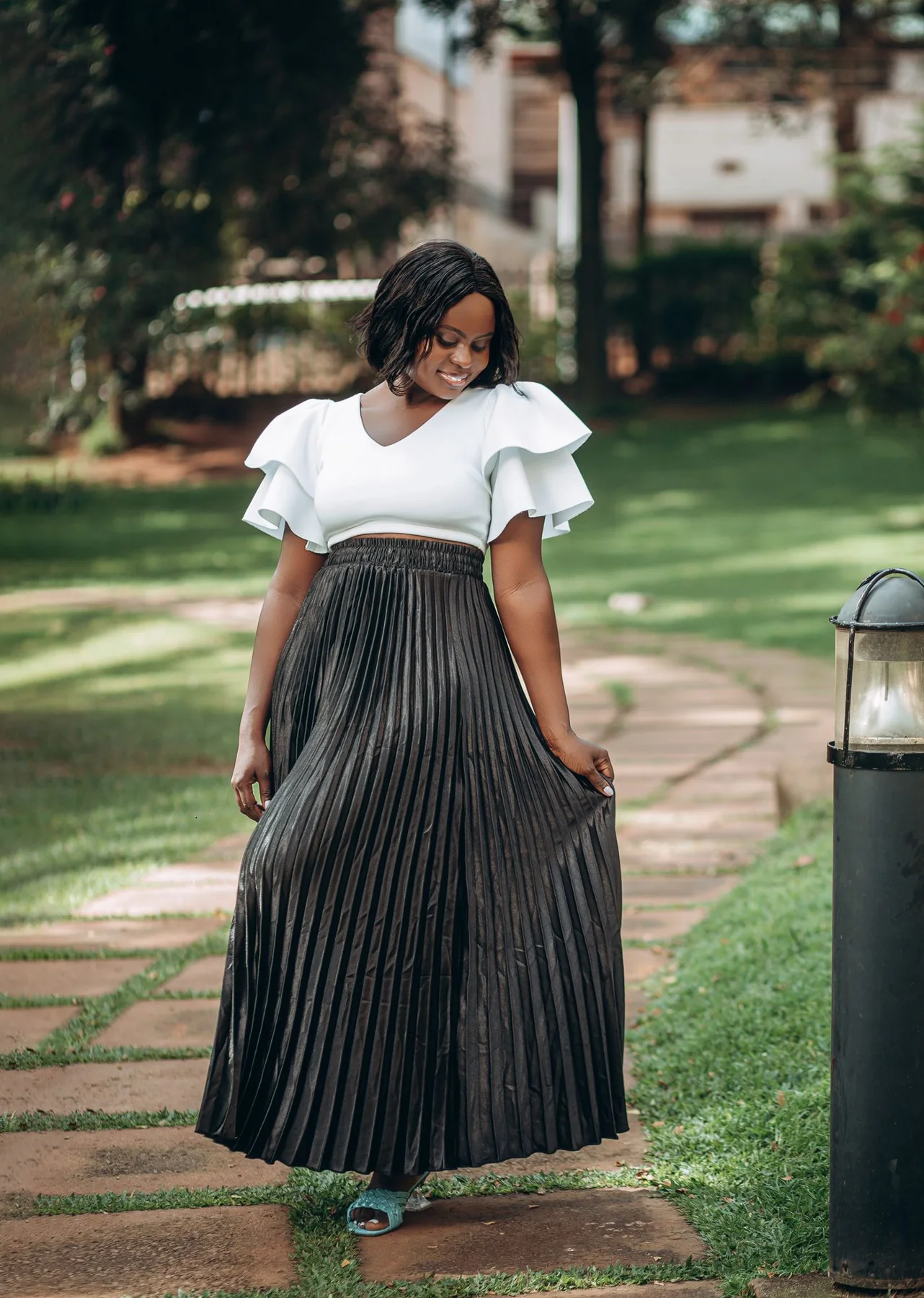
A pleated skirt can look settled while standing and behave differently on a chair. The fabric may gather around the seat, move against another layer or need a different arrangement when you stand again. Include sitting in the outfit decision before the occasion. The aim is to understand the garment's ordinary behaviour, not to hold every pleat in the position of a display photograph.
Use the actual skirt and relevant layers
Try the garment with the pieces intended for the day, following its care information and any seller fitting requirements. A different top or coat can change the available space around the waist and seat. Check the actual combination rather than transferring a conclusion from another skirt with a similar silhouette.
Handle the fabric appropriately and avoid pulling, pinning or altering it simply to make a trial look tidy. If the skirt's construction is unclear or a fit concern persists, seek suitable advice before changing it. A styling check should not conceal a genuine problem with size or condition.
Choose a useful sitting context
Use a safe, suitable chair that reflects the planned activity where practical. A quick perch on the edge of a bed may not answer a question about an extended seated gathering. Notice where the fabric naturally falls and whether you can settle without trapping it beneath an unsuitable object.
Consider the transition into and out of the seat as well as the still view. Leave appropriate room for the garment and the people nearby. Do not assume that another person will manage the skirt or move their belongings every time you sit. The outfit needs to fit the actual arrangement of the occasion.
Look at the whole outfit
Check whether a bag, coat or top changes the way the skirt behaves. Keep accessories in the places where they will actually be used, rather than removing every complication for a mirror photograph. Notice whether a change to one piece resolves the practical issue without requiring the skirt to be constantly adjusted.
The sitting-and-standing occasion guide offers a broader way to include ordinary movement in an outfit plan. A reference photograph can record the result, but it should not become a standard that requires the fabric to remain perfectly motionless throughout the gathering.
Decide what is comfortable to manage
Some garments need a small, ordinary adjustment when changing position. Decide whether that level of attention suits the day and your own preference. If the outfit needs continuous handling or makes the intended activity awkward, compare another combination. There is no obligation to solve every practical problem through more elaborate styling.
The similar-pieces wardrobe article can help distinguish a skirt suited to a standing event from one that serves a mostly seated day. Give each piece a realistic role. A useful fit conclusion reflects how you can participate in the occasion, with the pleats allowed to behave like fabric.