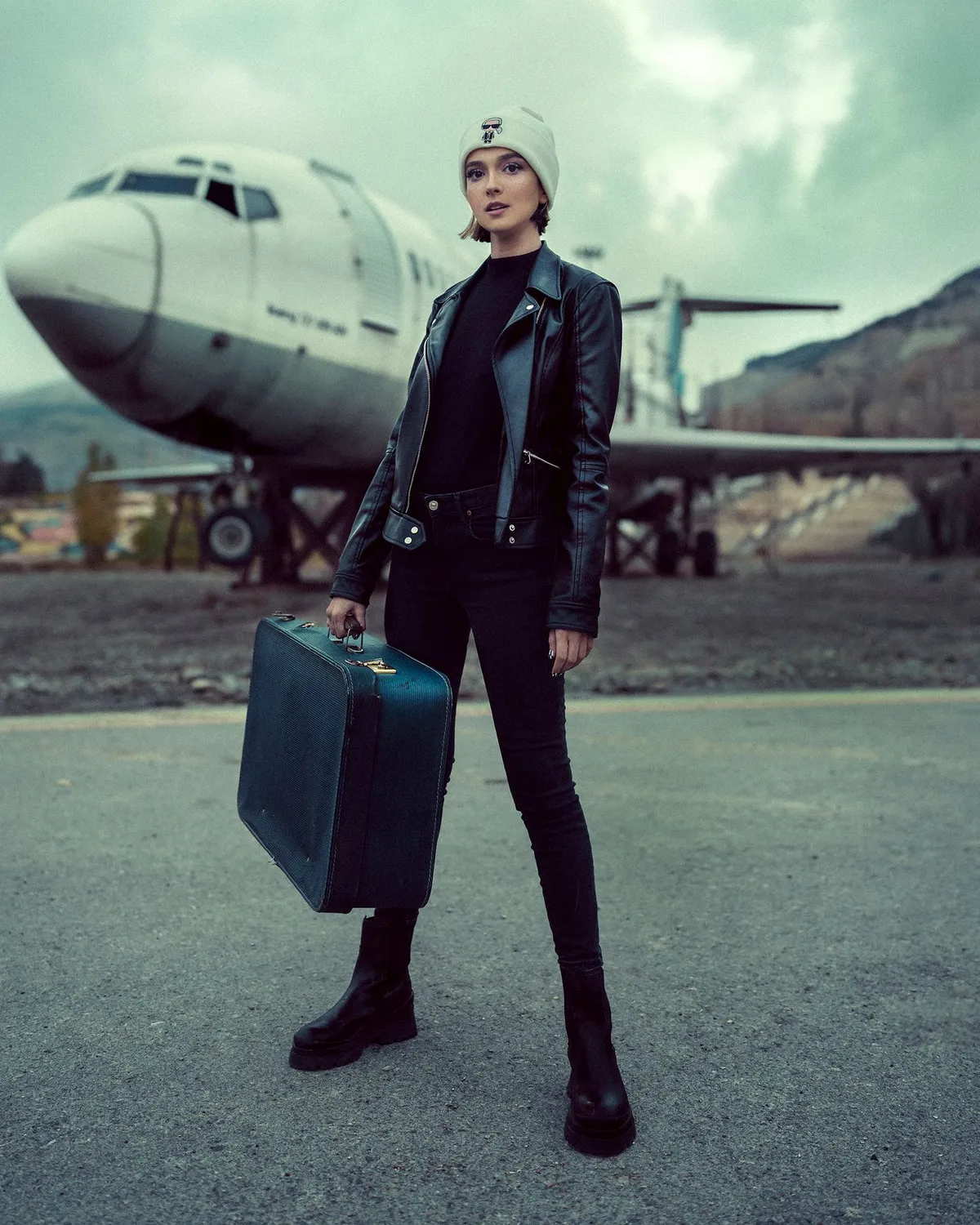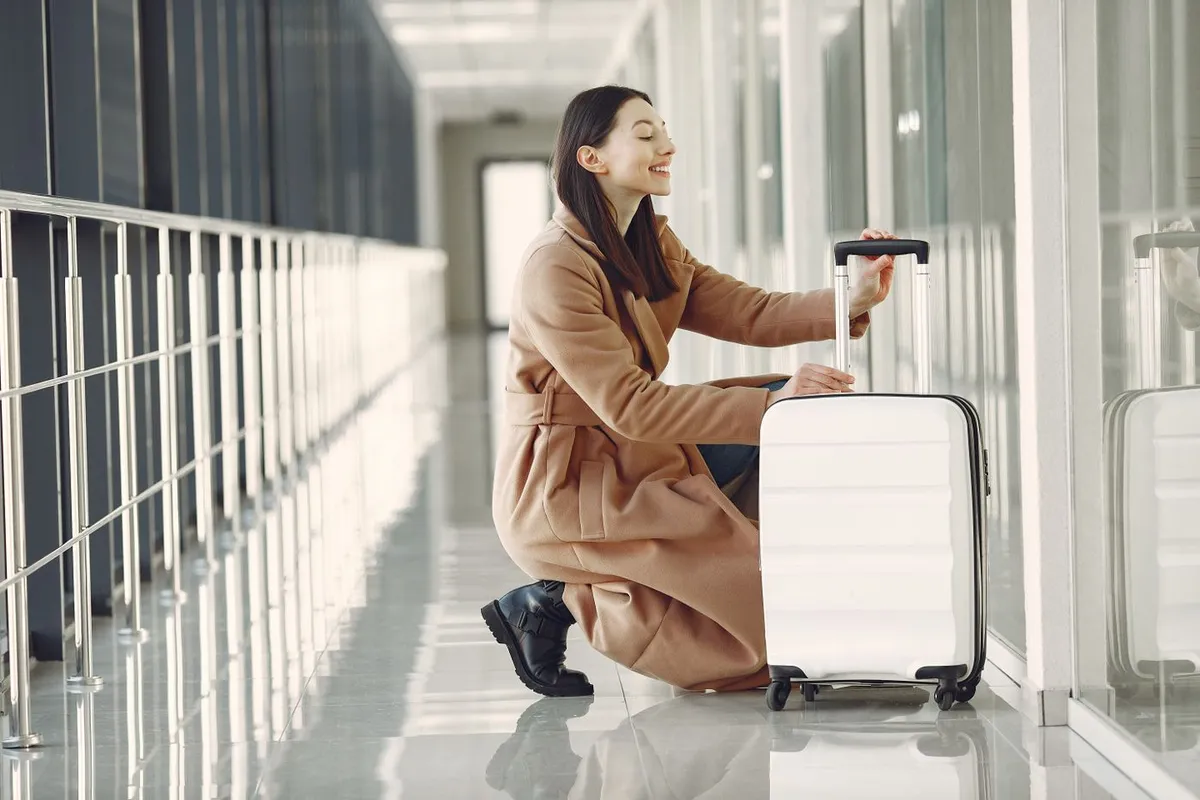
An airport outfit needs to cover several rooms and climates before it reaches its destination. You may leave home in warm weather, wait beside a cold vent, spend hours seated and arrive somewhere rainy. Dressing only for the departure forecast ignores most of that sequence.
A flexible combination is a breathable base, trousers with room to sit comfortably, a removable middle layer and an outer layer chosen for arrival. Keep the number of pieces manageable. The best travel outfit is the one that lets you move, adjust and find your documents without turning your seat into a storage system.
Start with seated comfort
Try the trousers while sitting for a few minutes, not only while standing in front of the mirror. Check the waistband and the fabric behind the knees. A rigid pair that fits perfectly upright may be annoying when you sit for much of a day. A pull-on trouser or relaxed jean can work, provided it fits securely and does not drag along the terminal floor.
Choose a top with a neckline you will not need to rearrange when leaning forward. If you wear several layers, check how the seams and sleeves stack together. A bulky sweatshirt under a narrow coat can restrict your arms before you even lift a bag into the overhead compartment.
Travel comfort is individual. Avoid buying a garment labeled for travel without looking at its actual measurements, care instructions and features. The label does not establish how it will feel on your body or with your luggage.
Use layers that can change jobs
A cardigan or light overshirt gives you an adjustment between a tee and a coat. Wear it open in a warm queue, button it in the cabin, and remove it easily if the arrival terminal is hot. It should fit inside your personal bag when not needed. A layer too bulky to carry can become an obligation for the rest of the journey.
A scarf can add warmth, but consider whether you like managing it alongside headphones, a bag and documents. Some people prefer a zip-up layer with no loose ends. Choose based on your habits rather than treating a long scarf as a required airport accessory.
Put the arrival weather layer within reach. If rain is expected, check the manufacturer’s protection claims rather than assuming a trench shape is sufficient. If the destination is warm, a heavy coat worn simply to save suitcase space may make your journey harder.
Shoes should suit the entire route
Pick footwear you already know is comfortable for walking and standing. Follow airport security instructions as they vary by location and screening procedure. A complicated closure can be inconvenient when you need to remove shoes, but ease of removal should not come at the expense of a secure fit.
Wear the socks you intend to travel in during a shoe fitting. Leave room for the fit you normally find comfortable, and avoid breaking in an unfamiliar pair on a day with limited alternatives. If you have medical questions about swelling, circulation or compression garments, seek qualified advice rather than using an outfit guide as a health recommendation.
Preparation checklist
- Sit, squat and reach overhead in the full outfit before packing.
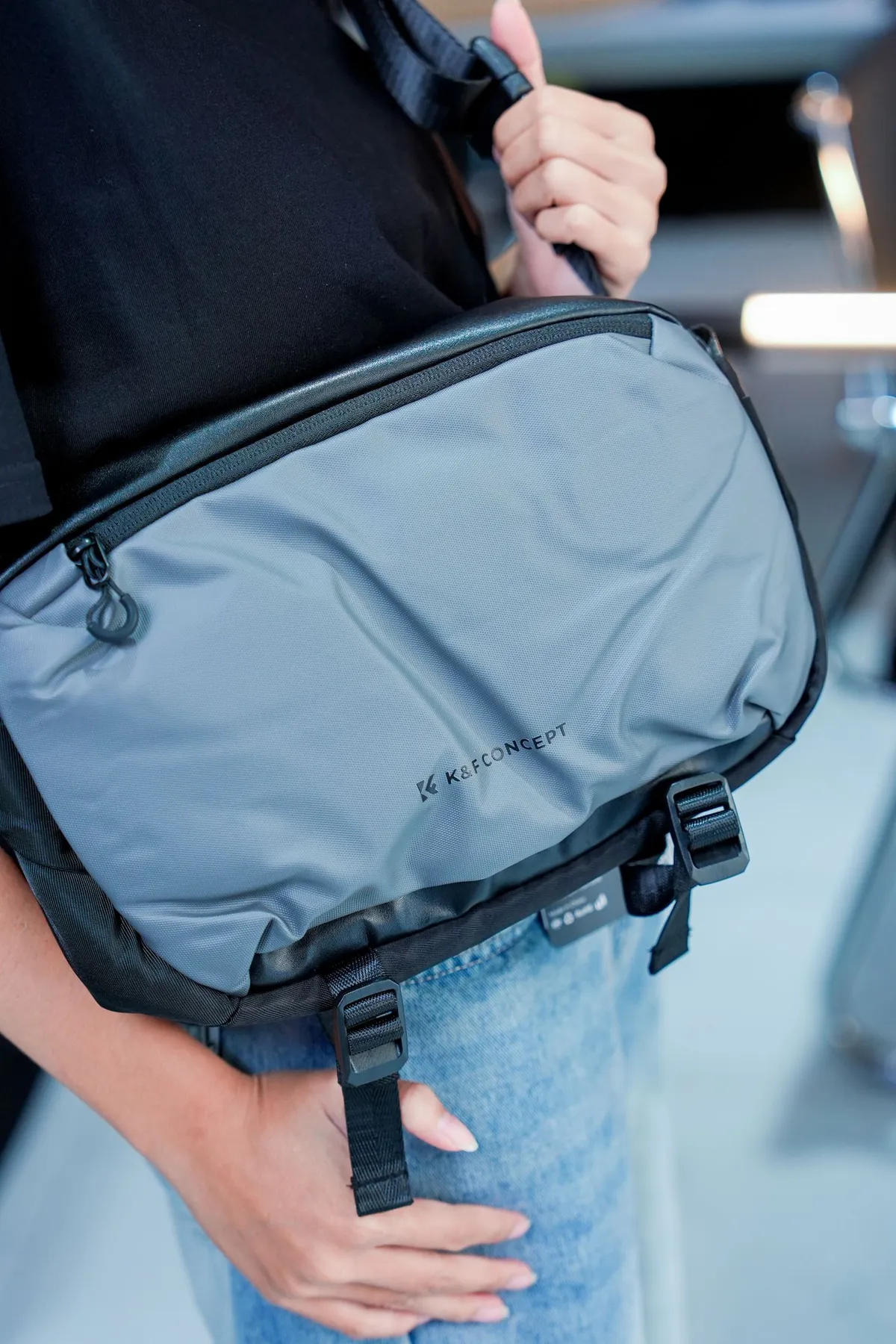
- Keep one removable layer accessible inside your personal item.
- Put travel documents in one secure, repeatable location.
- Check airline baggage dimensions and allowances on the airline’s current guidance.
- Confirm the arrival weather shortly before departure.
- Pack a clean top where you can reach it if a spill would otherwise derail the day.
Buying checklist
If a real gap remains, compare trousers for waistband construction and garment measurements, then compare light layers for packability and care. Skip a coordinated travel set if its two pieces will only ever be worn together. A useful purchase should also fit your ordinary week, unless you travel often enough to justify a specific function.
Tradeoffs
Loose trousers offer room for movement but can catch under shoes if they are too long. A thick knit feels cozy yet occupies more bag space when removed. A smaller bag is lighter, while a slightly larger one may make it easier to store the middle layer. There is no single airport uniform that resolves every journey.
Lay out the outfit beside your luggage the night before. Check the pockets, fastenings and shoes once, then leave the decisions alone. That preparation frees your attention for the parts of travel that clothes cannot solve: departure times, gates and the route to your accommodation.