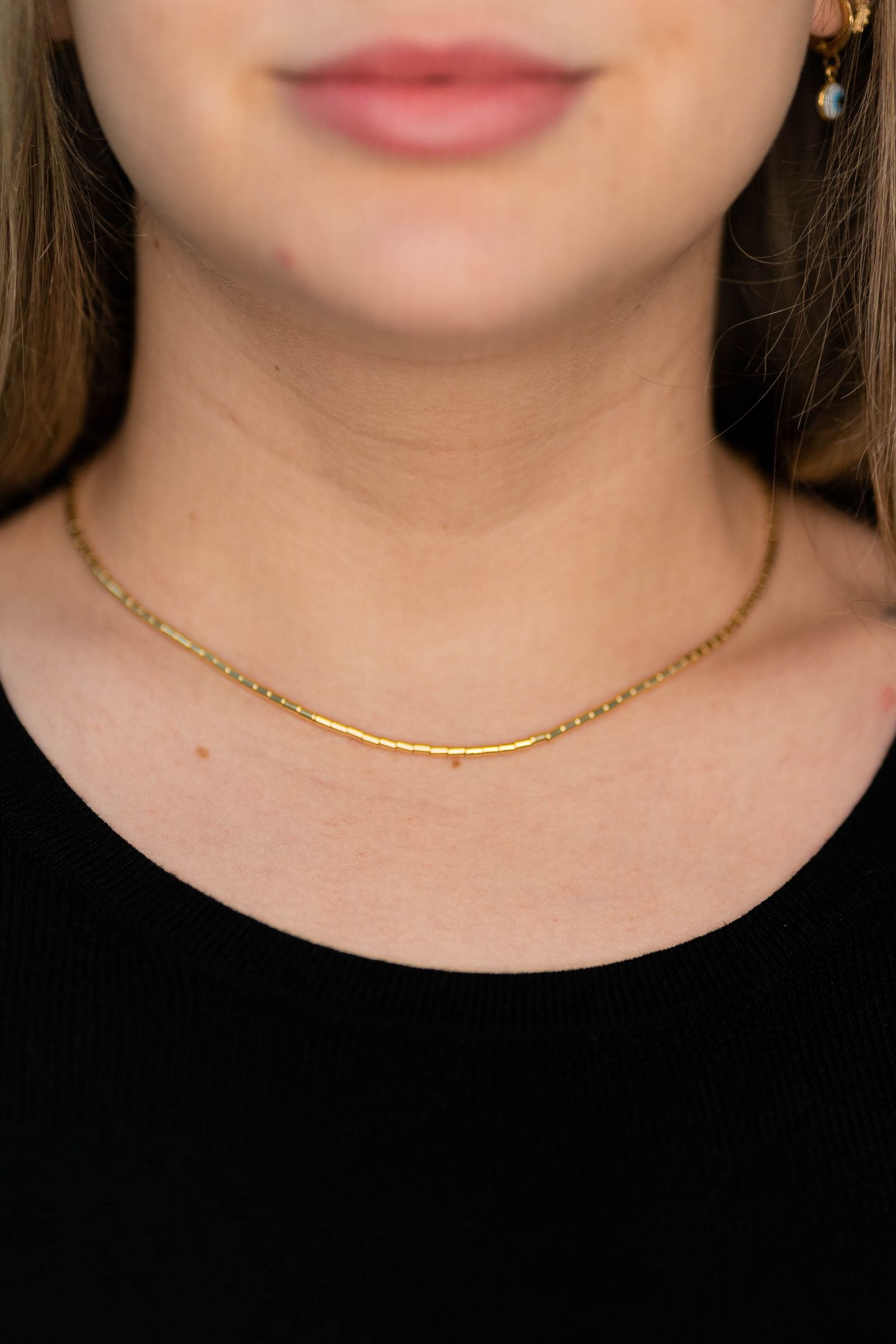
A textured knit changes the background against which jewellery sits. A pendant may disappear into a deep stitch, while a bracelet can meet a sleeve each time you move your hand. The answer is not a universal rule about avoiding jewellery with knitwear. It is a small check of the particular surfaces, shapes and movements in the outfit you intend to wear.
Begin with the knit as worn
Put on the knit and arrange its neckline and sleeves normally. If you usually push the cuffs back, include that position; if you wear the sleeves long, leave them long. Add the piece of jewellery you are considering and see where it settles without repeatedly centring it. A necklace may sit partly on the fabric and partly against the skin, depending on its length and the neckline.
Look at the visual relationship first. Decide whether you want the jewellery to be a clear focal point or a quieter detail. A small piece against a highly textured background may be difficult to see, which may be perfectly acceptable if subtlety is what you want. If you were hoping for a stronger accent, try an existing alternative before assuming that the knit requires a new accessory.
Check the points of contact
Move through ordinary actions: reaching for a cup, resting your forearms on a table and putting on your outer layer. Watch where the jewellery touches the knit. If a detail repeatedly catches or makes you move cautiously, remove it and consider another pairing rather than forcing the contact. This is a practical observation about the pieces in front of you, not a material-care claim about every necklace or yarn.
For bracelets and rings, pay attention when the sleeve moves over the hand. For a necklace, check how it behaves when you lean forward and return upright. You may prefer a different length, a smoother shape or no necklace at all with this particular garment. Make the change that answers the actual contact question, then repeat the movement to see whether it helped.
Leave room for the rest of the outfit
Add a bag strap or scarf if either will share the same area. A combination that looks settled indoors can become busy when several objects compete at the neckline. You can simplify one element while keeping the others. Try to avoid changing every accessory at once, because a single adjustment often gives a clearer result.
Record a successful pairing with enough detail to repeat it: the cream textured knit with small earrings and no necklace, for instance. The purpose of the note is to reduce future trial and error, not to prescribe one permanent way to wear the garment. When the occasion or outer layer changes, you can revisit the choice using the same simple checks of visibility, contact and comfortable movement.
Related reading
Check a Necklace Clasp as Carefully as the Front View, The Layering Pieces That Earn Their Space in a Small Closet.