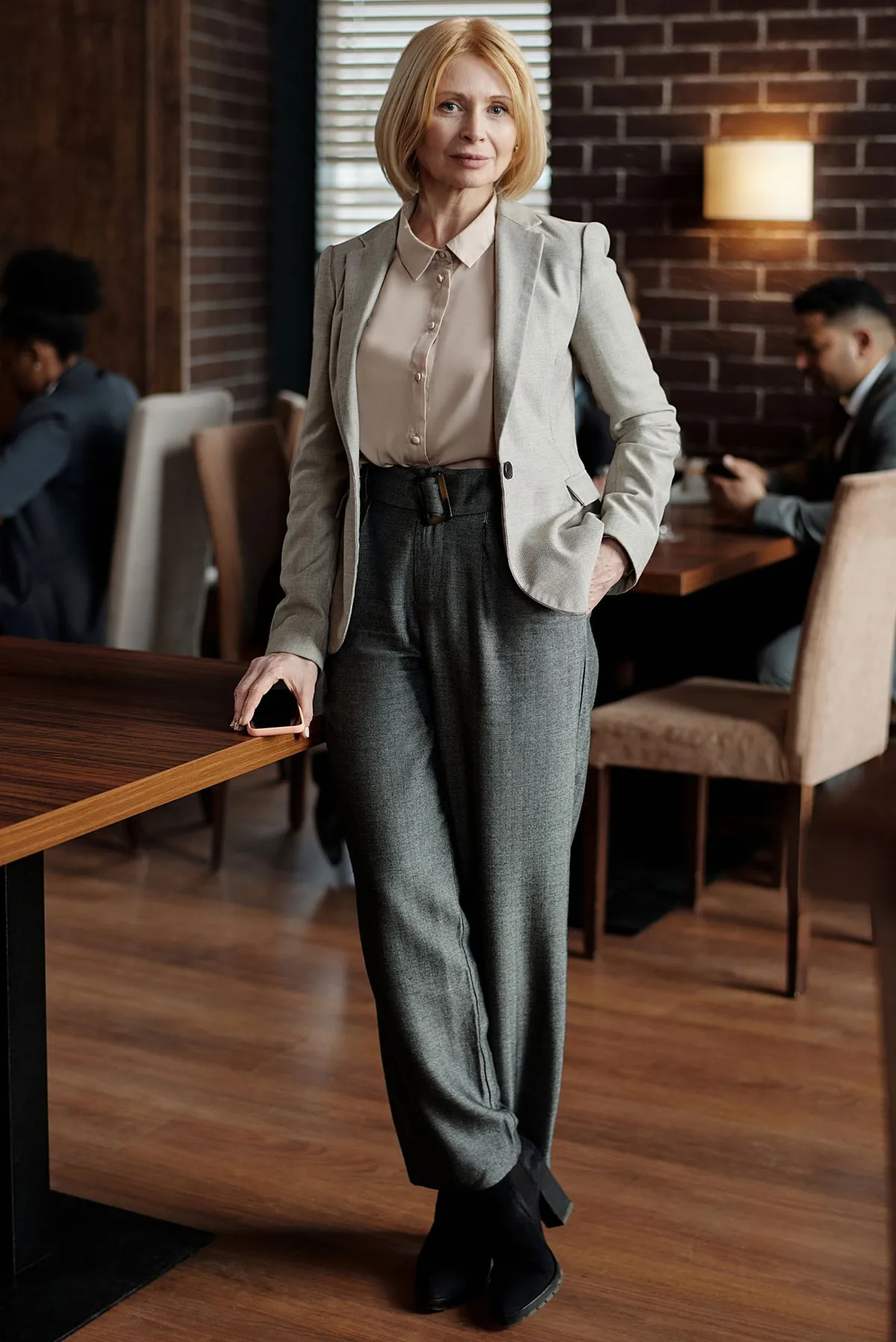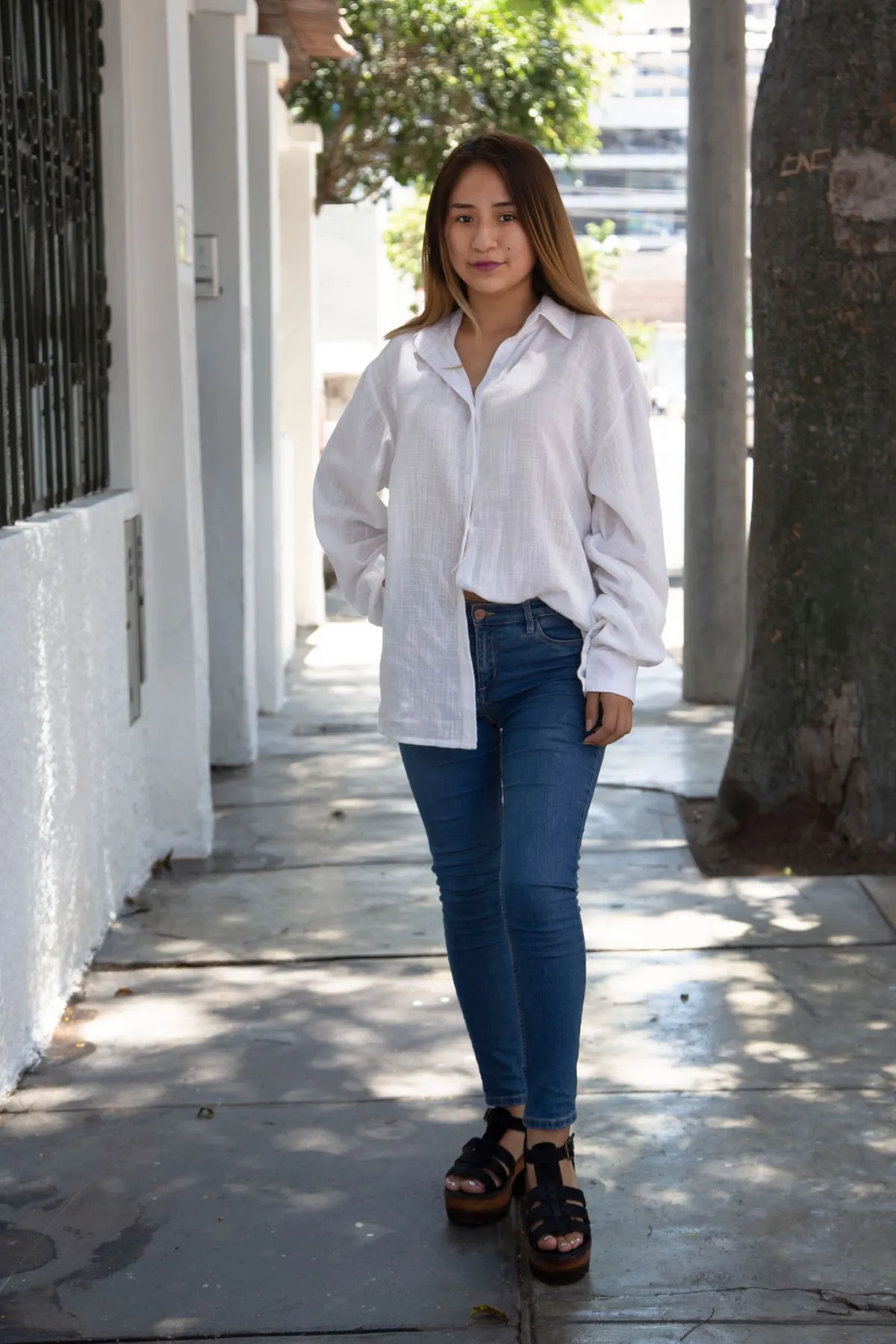
A desk outfit should be considered from the chair as well as from the mirror. Sleeves meet keyboards, jacket fronts move when you reach and a waistband can feel different after sitting. A short trial with the furniture and equipment you normally use gives you more relevant information than repeatedly adjusting the outfit while standing. It can also explain why a familiar garment feels different in a new combination.
Set up an ordinary working position
Put on the outfit with the intended base layers and shoes. Sit at your usual desk, or a similar table if you are away from it. Arrange your equipment as you normally would rather than moving it to make the clothes look more settled. Begin with the garment positions you actually prefer: sleeves down or pushed back, jacket open or closed, top tucked or untucked.
Type a short passage, use the mouse or trackpad and reach for a notebook. Notice where cuffs and lapels settle afterwards. A sleeve that needs attention only once may be easy to manage. One that repeatedly covers your hand or catches your attention can suggest that this particular arrangement is less practical for a desk day. Keep the observation about the outfit, without treating it as a judgement on your body.
Include the transitions around the chair
Stand to collect an object and sit again. Add the movement of taking off a jacket if you expect to work without it for part of the day. Check whether the layer beneath remains arranged in a way you like. A combination may work best when the jacket is an arrival layer rather than a garment you keep on while typing.
If you carry a work bag, put it on and remove it during the trial. Its strap can shift the jacket or blouse in ways that a desk-only check misses. Similarly, try retrieving the item you use most often from a pocket. You are looking for a manageable sequence of ordinary actions, not trying to make every garment remain motionless.
Choose one practical adjustment
Change the detail connected with the problem. You might wear the jacket open, select a different base layer or choose trousers that feel more comfortable when seated. Repeat the same short sequence after the change. That comparison helps you see whether the adjustment answered the issue instead of merely making the standing outfit look different.
Save a note about a combination that works well for your work pattern. Include whether the jacket stayed on, how the sleeves were worn and any pairing that mattered. When a day includes a presentation or another activity away from the desk, consider that separately. A useful desk outfit supports the way you spend the day, leaving you free to focus on the work rather than continually restoring the clothes to their first arrangement.
Related reading
What to Wear to a Casual Office When Jeans Are Allowed, How to Dress for a Work Presentation Without Buying a Suit.