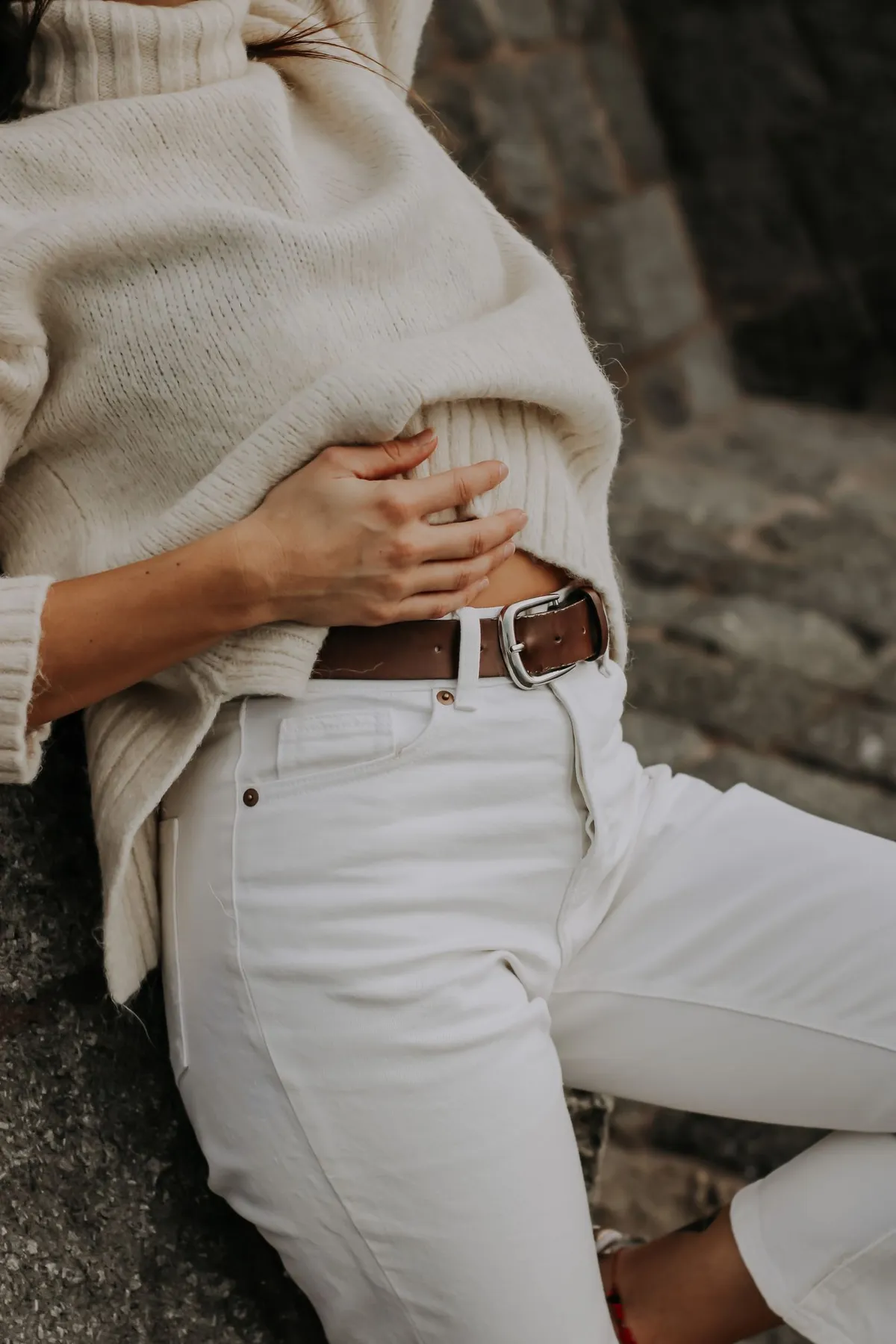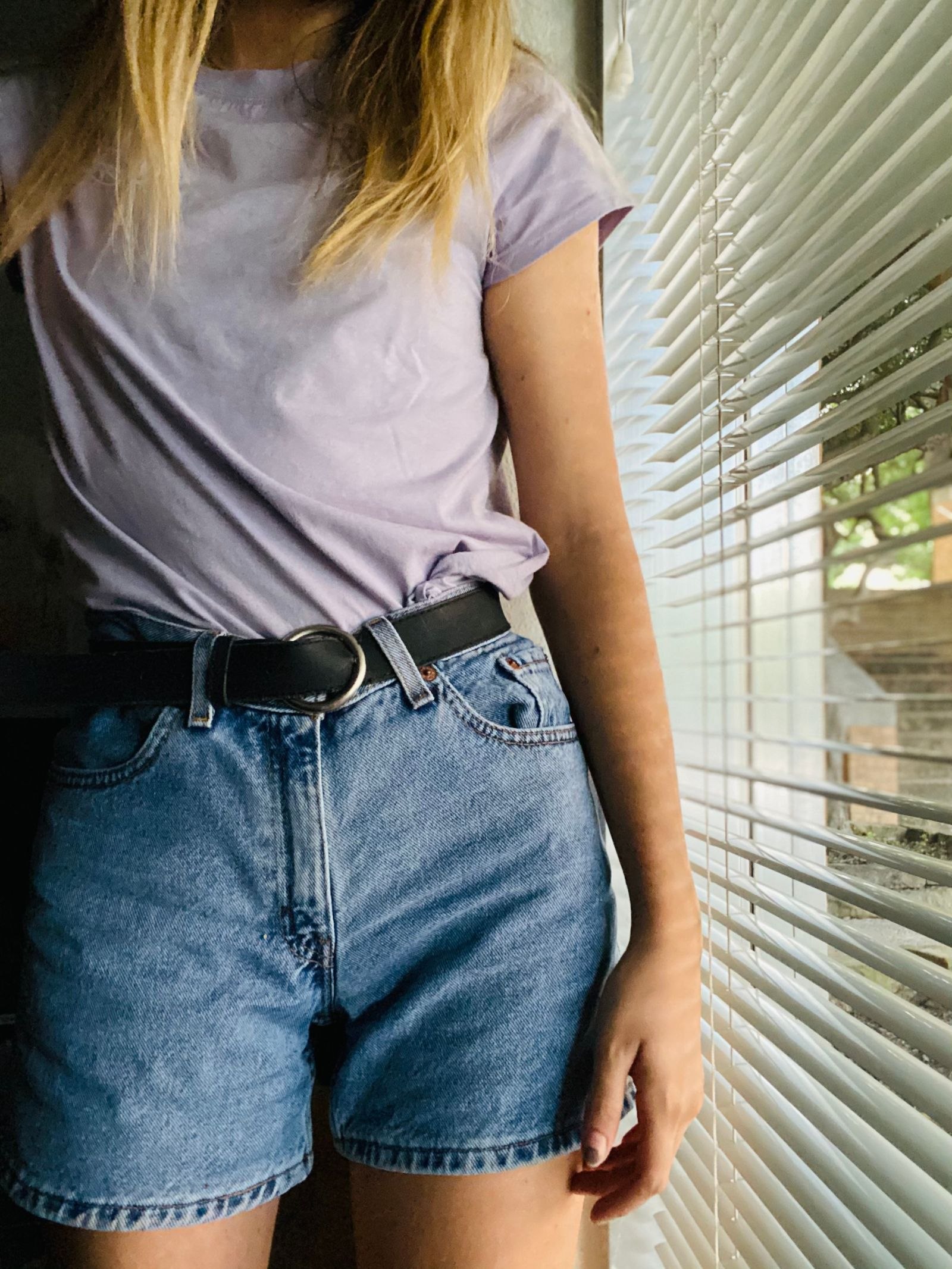
A belt and a shirt tuck can change how denim shorts feel as well as how the outfit looks. Try the actual pieces together before deciding the combination is ready. Keep personal comfort and the garment's design central, and use the belt according to its instructions. There is no universal amount of waistband that needs to be visible. The useful outfit is one you can sit and move in comfortably, with a shirt position that works beyond a brief standing view in the mirror.
Check the shorts before adding the belt
Wear the intended pair and notice the waistband, length and ordinary movement. Follow care guidance and account for personal needs. Do not assume a belt will resolve an unsuitable fit or keep an uncomfortable garment practical for the whole day. The shorts should have a clear role in the outfit on their own. If a fit concern needs attention, address it appropriately before focusing on the decorative detail. A comfortable base makes the belt comparison useful rather than asking one accessory to fix every unresolved question.
Use the belt as designed
Check the actual belt and garment information, including the relevant fit and intended use. Avoid forcing hardware or using an improvised adjustment that conflicts with the product's design. Keep your comfort central and notice the combination while seated as well as standing. Do not infer material properties or durability from appearance. If shopping, verify the specific product details directly with the retailer. A familiar color or buckle shape does not establish that another belt will behave identically to one already owned.
Compare appropriate shirt positions
Try the top untucked and another suitable arrangement where its construction allows. Follow the garment's care needs and avoid forcing a bulky group of fabric into the waistband just to expose the belt. Notice how the shirt returns after ordinary movement. A tuck that needs repeated attention may not suit the actual day, even if it creates a view you like while standing still. Choose the version comfortable for you rather than a formula that assumes every shirt and pair of shorts should be arranged the same way.
Include shoes and the bag
Wear the footwear appropriate to the route and your needs, then carry the intended bag as designed. Check the complete combination without adding unnecessary accessories to explain the belt. One clear supporting group can make the outfit easier to repeat. If something feels unresolved, change one existing suitable piece at a time. The practical test should reflect the actual outing, including sitting, walking and handling belongings, rather than a collection of items chosen separately because their colors appear to coordinate.
After wearing the outfit, remember the shirt position and belt that worked with the particular shorts. A short note can make another morning simpler without turning getting dressed into a detailed record-keeping task. Keep the combination flexible when the day's activities change. The belt and tuck are personal options within a comfortable outfit, not requirements that determine whether denim shorts look intentional. Their value comes from a clear fit and a version you can use through ordinary movement without constant adjustment.
Continue planning with What Makes a Good Everyday Belt?, Weekend Errands, One Outfit: Comfort Without Gym Clothes.