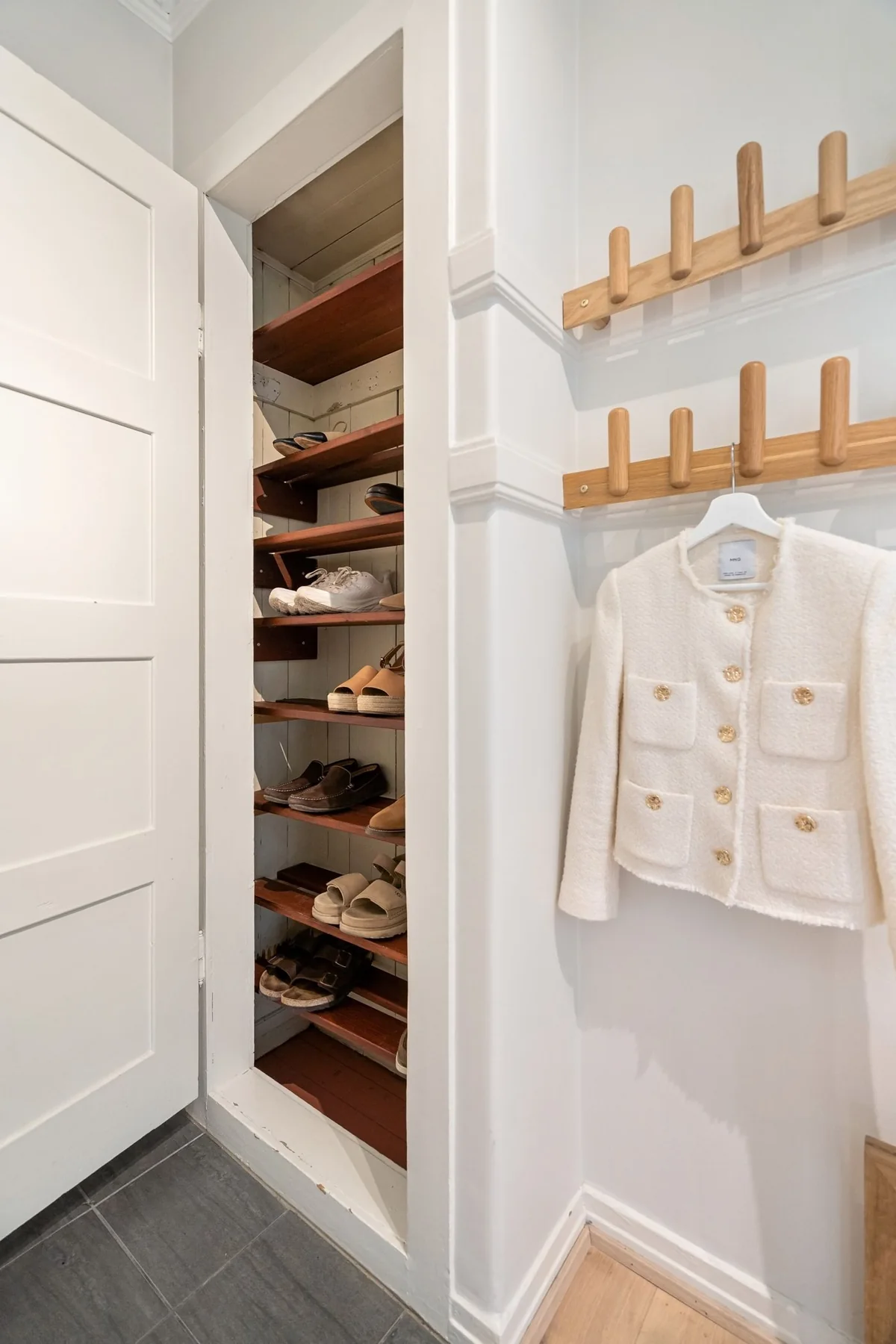
A garment on a wall hook can be ready for tomorrow or waiting for a specific action. Several garments left there without a clear purpose can become another closet you have to search around. Choose one temporary role for the fitting and decide when the item returns to appropriate storage. Follow the instructions for the hook, wall and clothing involved. The arrangement should support an ordinary dressing task without turning every empty section of the room into a place for unresolved wardrobe decisions.
Confirm the fitting can serve the task
Check installation, load and intended use, obtaining appropriate help where needed. Do not assume a decorative hook is suitable for a heavy garment or several pieces together. Use appropriate garment support and follow the clothing's care guidance. Consider the item's full footprint when hanging, including sleeves and hem, rather than only the space occupied by the fitting. A suitable temporary position begins with equipment used as intended and a route through the room that remains clear while the garment is in place.
Name the temporary category clearly
Choose whether the hook holds a ready outer layer, tomorrow's selected garment or another small group with a specific next step. Keep clothing needing care distinct from ready pieces. Avoid using the same fitting for several incompatible purposes merely because the items all have loops or hangers. One clear role makes the arrangement understandable to the household. It also helps you notice when an object stays because nobody has decided what happens next, rather than because the position remains useful for its intended task.
Check the garment in the room's ordinary use
Open nearby doors and drawers and consider how people move through the space. Keep necessary access available and avoid letting the garment brush unsuitable surfaces or interfere with equipment. If it repeatedly needs moving to use the room, choose a different appropriate position or return it to the closet. The hook should reduce handling rather than create another object that must be relocated several times each day. Test the actual arrangement, not the empty fitting before a long coat or wider sleeve is hung on it.
Finish at the next action
Once the outing or care task is complete, check the garment and return it appropriately. If tomorrow's outfit changes, put the unused piece away rather than leaving it beside the replacement. The fitting should become available again when its current role ends. A small return action prevents the temporary group from expanding without a decision. If the same garment remains unused repeatedly, review its role in the wardrobe rather than preserving it on the wall as an indefinite suggestion for a future day.
Keep the arrangement limited enough to reset without a separate tidying session. If more items gather there, identify their actual destinations instead of automatically adding another hook. You may need a better closet position or a clearer return habit for one daily object. Temporary storage works because it has a defined purpose and a finish. It lets a garment be visible when that helps the next task, then returns the room to ordinary use with the rest of the wardrobe properly stored.
Continue planning with A Small Entryway Setup for Bags, Coats and Tomorrow's Outfit, A Closet Organization Plan You Can Finish in an Afternoon.