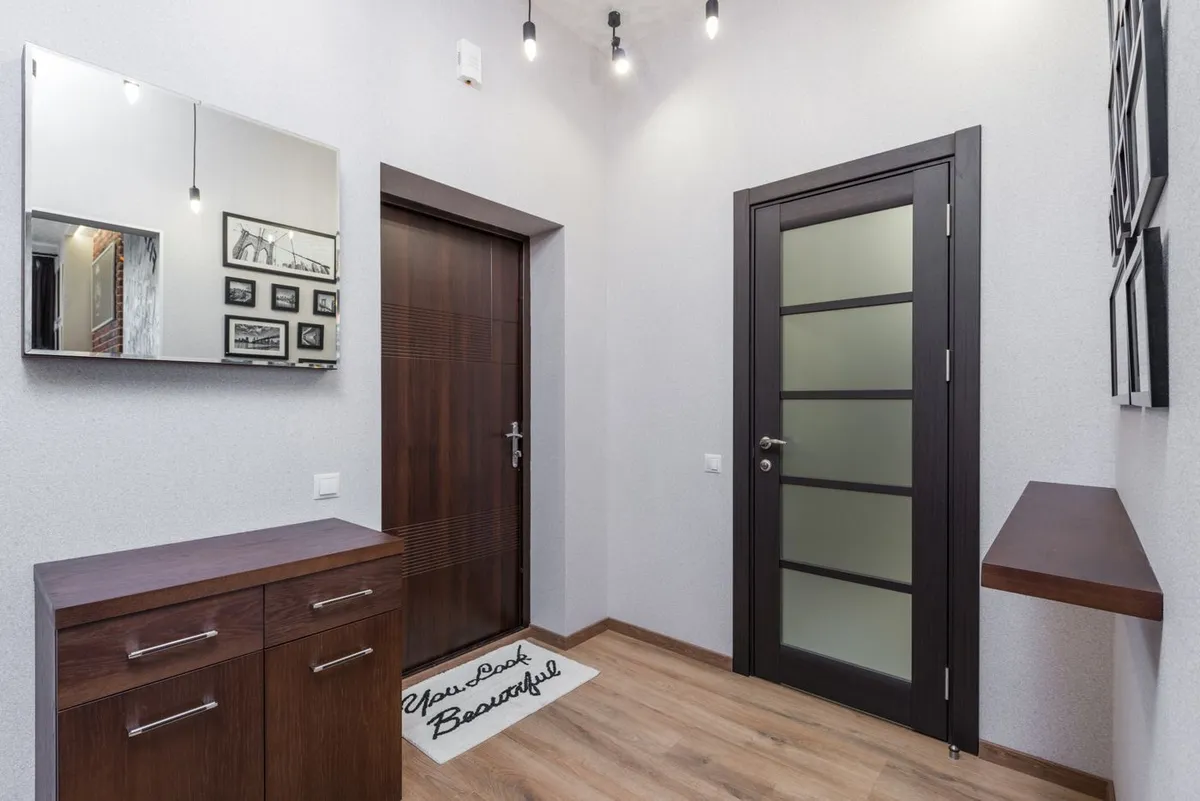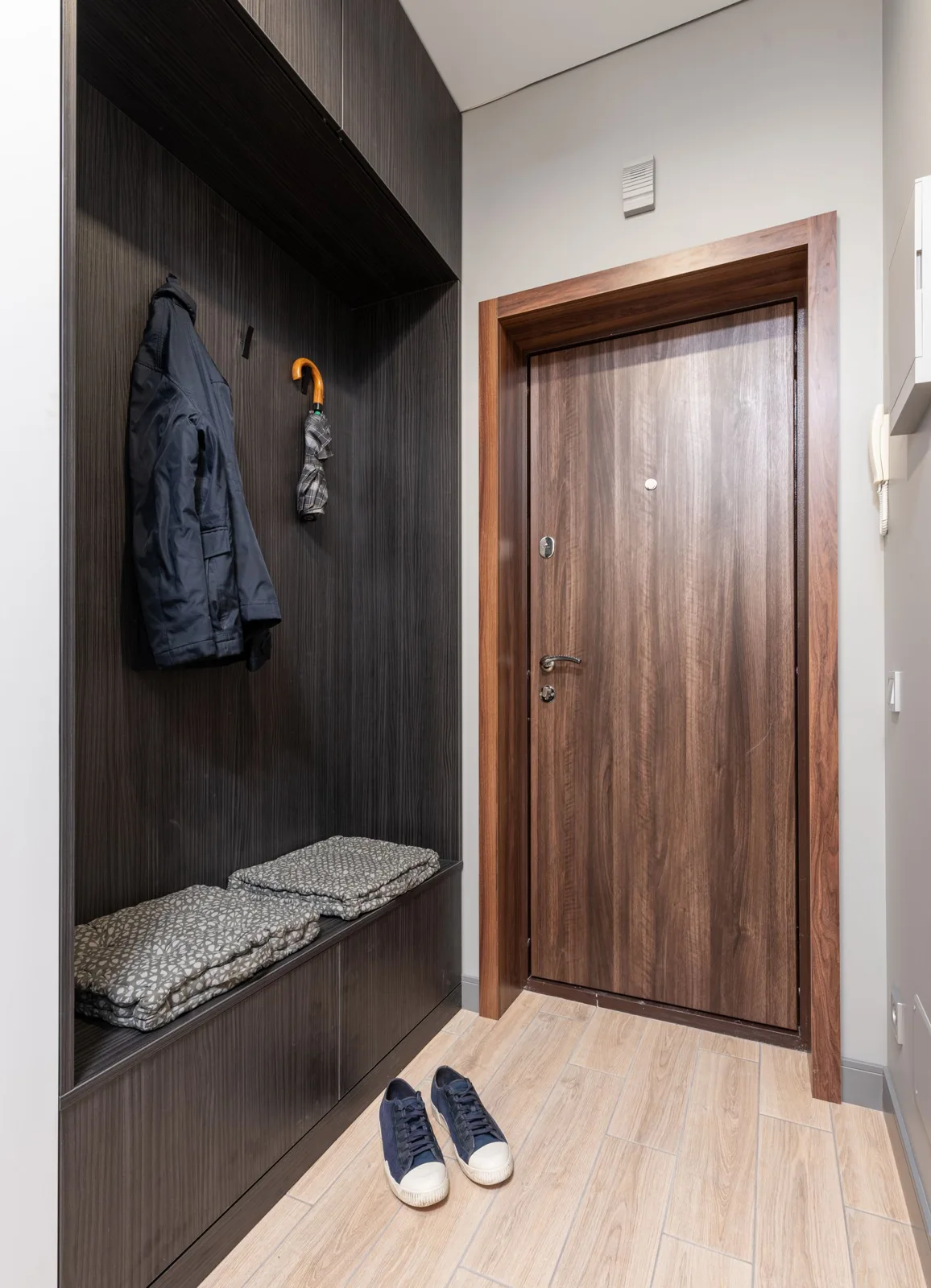
Choosing an outfit the night before can save little time if its shoes, bag and small essentials are still scattered through the house. A departure point connects the clothes you selected with the moment you leave. It can be a temporary place near the wardrobe or a clear section of a bench. Its purpose is to make the next action obvious without turning a shared entrance into permanent clothing storage.
Start with the departure you actually have
Name the first destination and the time you expect to leave. An outfit for a desk day needs a different final check from one for an early train or a dinner invitation. Put the garments together where you normally dress, then identify what will be added later. Shoes may stay near the door while a coat remains on its usual hook. The departure point can connect those locations through a short note rather than forcing everything onto one chair.
Gather only the small items that belong to this particular outing. That may mean a belt, a pair of socks or the bag you chose for the outfit. Leave everyday keys in their established place if moving them would make the morning less predictable. Avoid creating a second home for essentials simply because a photograph of a complete outfit looks tidy. Familiar retrieval matters more than displaying every component together.
Keep the shared space workable
Choose a surface that can hold the selection without obstructing a door, seat or ordinary walking route. If the hallway is shared, agree which section is temporarily available and when it will be cleared. A garment bag or a single hanger inside the bedroom may be more useful than an attractive arrangement in a busy entrance. Keep footwear positioned so that another person can still use the space normally.
Add an unfinished action where you will see it. For example, a note saying add the blue scarf from its usual hook is clearer than leaving several possible scarves on the bench. If the weather or destination is uncertain, name the choice that remains open. Two labelled alternatives can be sensible; a growing pile of unrelated possibilities usually means that the outfit decision has not yet been made.
Close the loop when you return
Before bed, walk through the departure sequence once. Check that the chosen shoes are the pair you intended and that the bag can take the day's actual contents. This is a practical rehearsal, not a reason to unpack every cupboard. Correct the missing component while the outfit is still in view, then leave the arrangement alone.
On returning home, restore the temporary surface. Put reusable pieces back in their ordinary places and send worn items into your normal care routine. If a component was repeatedly missing, adjust its usual storage rather than enlarging the departure pile. A useful departure point disappears after doing its job, leaving the hallway ready for the next person and the next day.
Related reading
A Small Entryway Setup for Bags, Coats and Tomorrow's Outfit, How to Audit Your Closet Before Buying Another Basic.