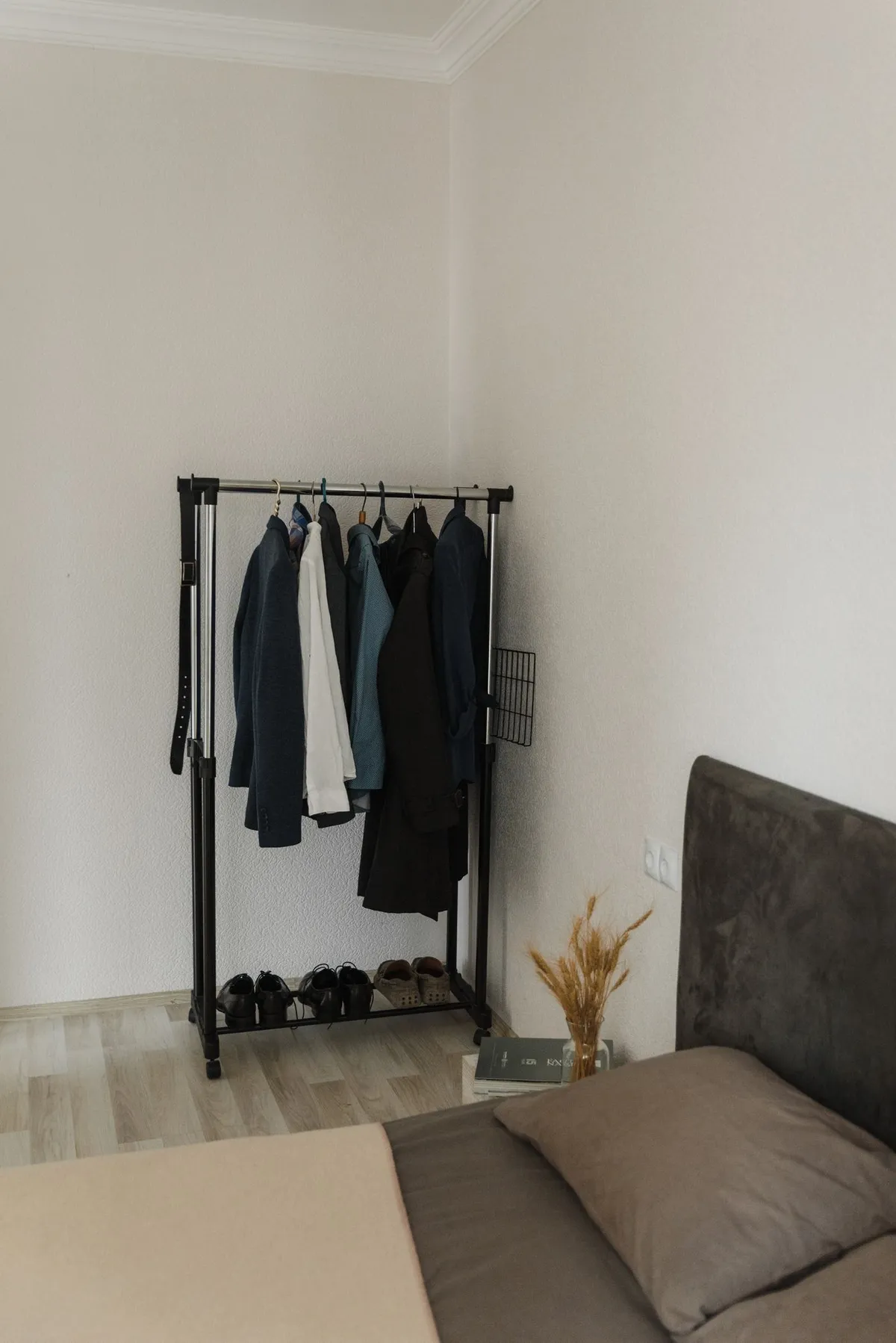
A fall capsule starts to make sense on a Wednesday morning when the forecast changes, your favorite jeans are in the wash and you need to leave in fifteen minutes. Its purpose is to give you another workable combination, not to make your closet resemble a carefully arranged photograph. Begin with one ordinary week: commuting days, a grocery trip, an evening meal and whatever your weekend actually involves.
Write those plans on paper before counting clothes. Three office days may require more washable tops than a week spent at home. A walking commute changes your shoe needs. If autumn arrives late where you live, a light jacket can be more useful than the heavy knitwear associated with the season.
Start with a small, flexible group
Select two bottoms that fit comfortably now, three tops, one removable knit, a jacket and two pairs of shoes. These are working categories rather than a required shopping list. A dress can replace one bottom-and-top combination, and a second cardigan can replace a jacket if your climate allows it.
Lay everything together. Each bottom should work with at least two tops without a special accessory or a particular mood. Check the actual lengths: a shirt that bunches under a short knit may be less versatile than it appears on a hanger. Choose one dark or medium base color so your shoes and jacket can bridge the combinations.
Give every day a route
For Monday’s commute, try trousers, a washable top and a cardigan that can be removed at your desk. On Tuesday, swap the top and keep the same trousers if they are still fresh. Wednesday might use jeans with a shirt and the jacket. This exercise quickly exposes the missing function: perhaps all your tops are too warm indoors, or both shoes are unsuitable for rain.
Use the weekend to test a different level of formality. Jeans, a tee and a cardigan should feel distinct from your work combination without demanding an entirely separate wardrobe. An evening meal can use the same trousers with a cleaner neckline, a belt or a favorite piece of jewelry already in your drawer.
Build around laundry rather than perfect numbers
A capsule needs enough clothes to survive your washing schedule. If you do laundry once a week, three tops may not cover five consecutive days of wear. Add the necessary washable layers instead of forcing a minimalist total. Keep a backup outfit outside the capsule for spills, unexpected weather or a last-minute event.
Avoid putting every delicate piece into your first rotation. A wardrobe that depends on hand washing four items on Thursday evening is not automatically practical. Read the care labels and group clothes by the maintenance you are willing to do. The most useful capsule is the one that remains available when life gets untidy.
Buying checklist
- Identify a gap from an actual outfit, such as a light layer for a cold office.
- Match a possible purchase with two bottoms and your existing outerwear.
- Check shoulder movement, seated comfort and room for the intended underlayer.
- Read fiber composition and care instructions before comparing colors.
- Confirm the return window, especially when ordering several sizes online.
Uniqlo and Everlane are browsing starting points for everyday layers and trousers. Compare individual product descriptions rather than assuming that every basic has the same weight or fit. You may discover that a repair or small alteration solves the gap more effectively than another purchase.
Tradeoffs
A narrow color range makes combinations easier but can become repetitive if color is how you enjoy getting dressed. Keep one expressive shirt or scarf in the rotation. A very small capsule saves decision time but offers less flexibility between laundry days. More pieces can be sensible when your week crosses several dress codes.
Review the group after seven days. Note what you wore, what stayed on the hanger and what felt awkward halfway through the day. Adjust one element at a time. The reward is not a fixed number of garments; it is a wardrobe that can answer tomorrow morning’s plans without a long negotiation.