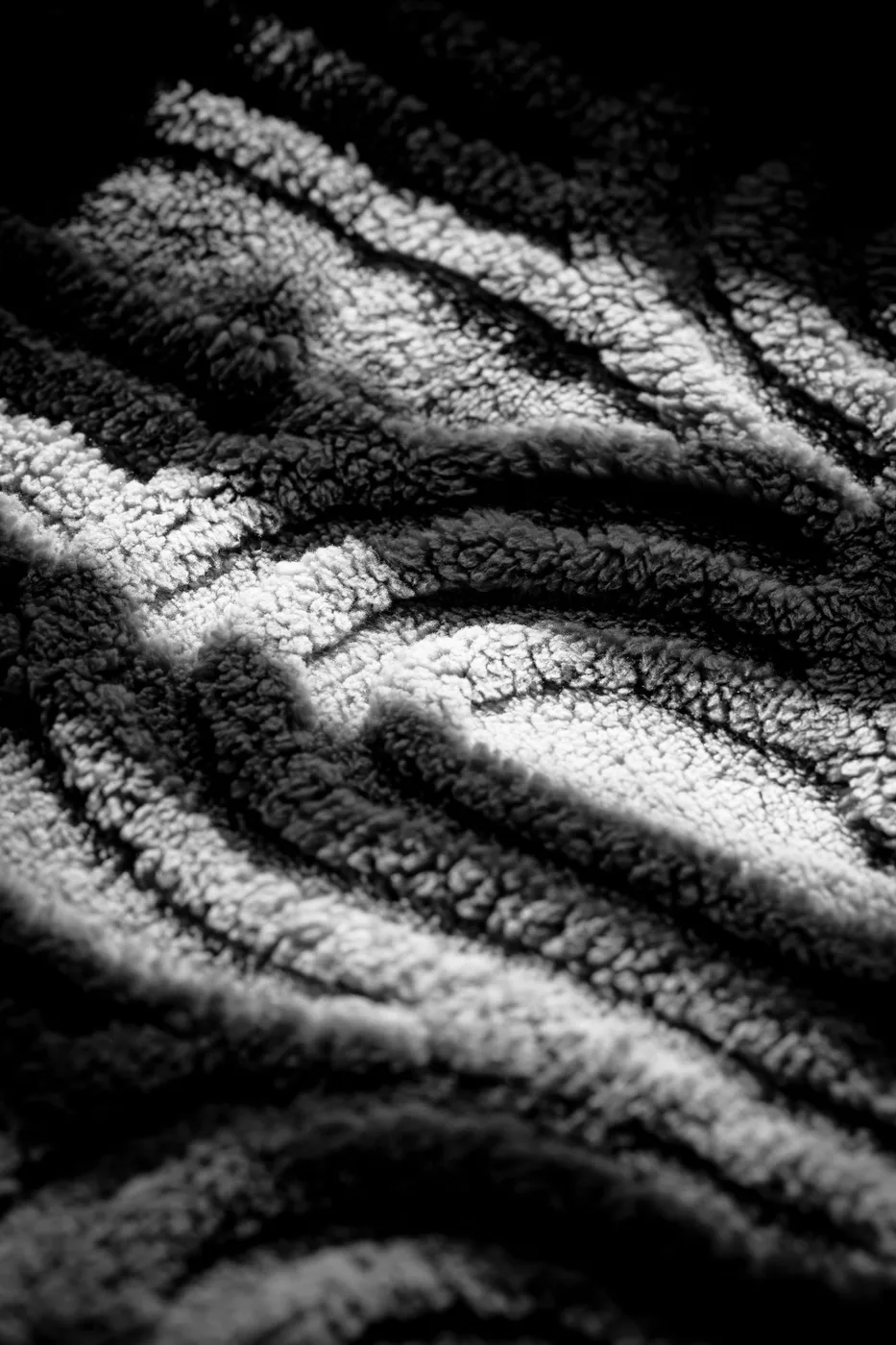
A fabric photograph can look dramatically different when the light comes from another direction. A textured knit may appear smooth in one picture and deeply ridged in the next, even though the garment has not changed. If you keep images for wardrobe decisions, use a consistent, understandable setup. The photograph should help you remember the visible surface rather than pretend to establish how the fabric feels or performs.
Decide what the image needs to record
Separate a texture reference from a colour reference or a full outfit photograph. Each answers a different question. A close image can show a visible weave or surface pattern but may hide the garment's overall shape. Keep a wider identifying picture where needed so that the detail remains associated with the correct piece.
Record the relevant garment information from its actual supplied label separately. A photograph does not reliably establish fibre content, care requirements or product quality. Do not describe an uncertain material as confirmed simply because it resembles another fabric. Keep the information source visible in your notes.
Make the lighting repeatable
Choose an ordinary place where the garment can be photographed appropriately without stretching or damaging it. Notice the direction of the light and avoid mixing a strong coloured lamp with another light source. Follow the garment's handling instructions and keep hot equipment or unsuitable surfaces away from it.
When comparing photographs, try to keep the distance, orientation and light arrangement similar. Do not apply a dramatic filter to one image and compare it with an unedited picture as though the difference belongs to the cloth. Preserve the original file if an edited copy is useful for another purpose.
Keep the decision grounded in the garment
Look at the actual piece when a decision depends on touch, fit, condition or movement. A texture photograph is a reminder, not a substitute for those checks. If a seller's image leaves an important question unanswered, ask for specific information through the seller's current process instead of filling the gap with an assumption.
The reference-piece fitting article offers a way to compare clothing against something you actually use. That comparison can reveal a meaningful difference that a close photograph cannot. Keep the picture as one part of the decision rather than allowing its visual drama to determine the whole assessment.
Name the image for its actual purpose
Use a findable garment description and distinguish a texture detail from a purchase record or styling image. Avoid including private labels, order information or unrelated possessions in the frame. If the item leaves your wardrobe, update the reference so that it does not appear to be an available outfit option.
The garment-information guide can help connect your reference image with the instructions that matter in use. A small, consistent set of photographs is useful when it supports a real question. More images do not improve the record if they make changes in lighting look like changes in the fabric itself.