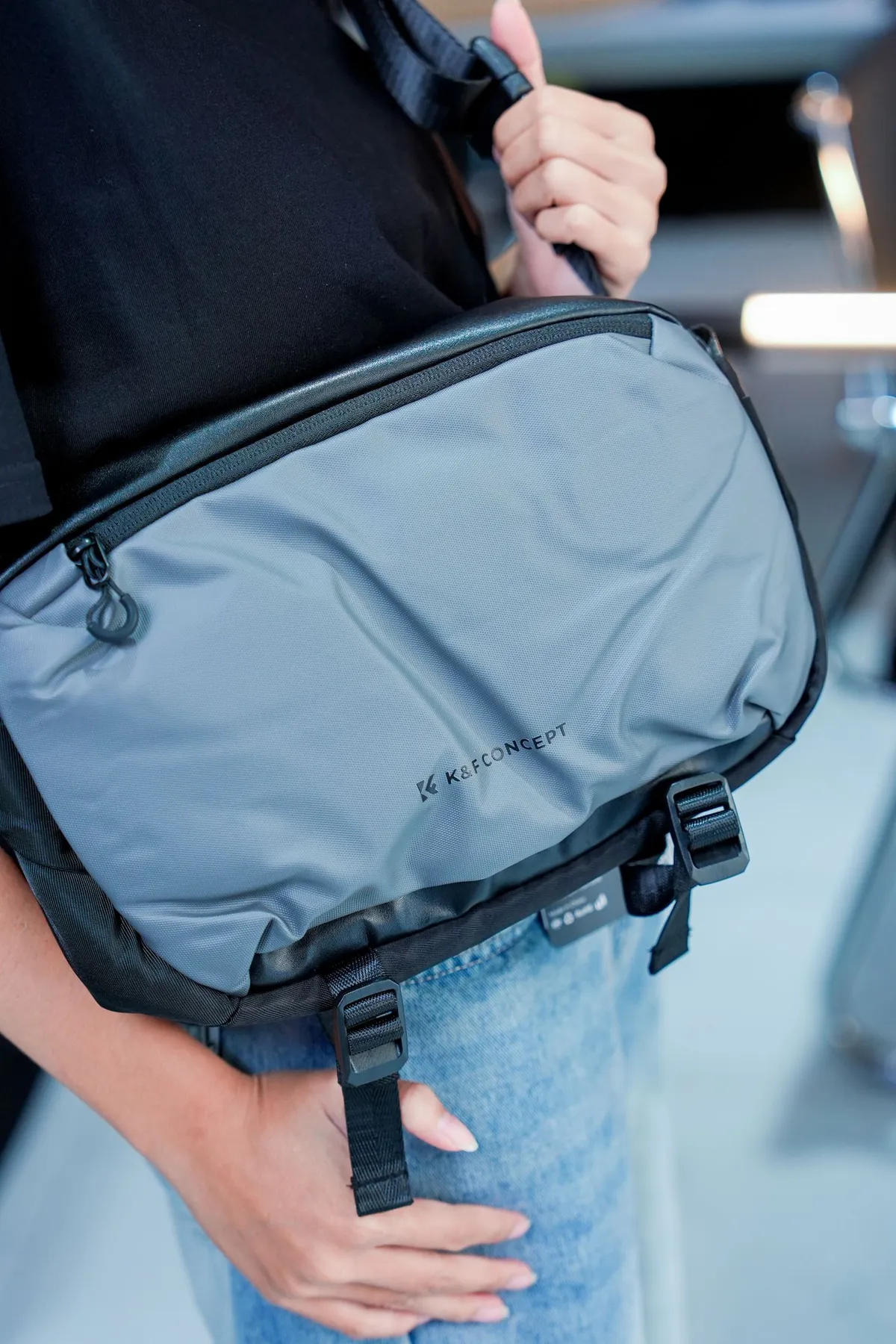
A small bag feels useful until you have to empty it at the checkout to find your card. The answer is not always a larger bag. Sometimes the problem is a wallet full of rarely used cards, a pouch that is almost as big as the bag or a collection of objects carried for situations that never occur on the planned outing.
Place everything from your current bag on a table and describe tomorrow’s day. A coffee meeting followed by errands has different requirements from an afternoon trip with a train ticket and glasses case. Pack for that sequence. The aim is a bag that opens and closes easily, with the most frequently used objects accessible without rearranging the rest.
Establish the non-negotiable items
Start with phone, keys, the payment methods you intend to use and any identification required for the plan. Add personal essentials appropriate to you. Do not discard something important merely to fit a fashionable bag; choose a larger carrier when the day’s real requirements exceed its capacity.
If you need a glasses case, test its fit before adding everything else. Rigid objects establish the arrangement of a small bag more than loose items do. Place them in a position that does not prevent the closure from working, and avoid packing a phone screen against keys or hard hardware.
Separate useful backups from habitual extras
A charging cable does little on its own if you will not have a compatible power source. A small battery pack may be appropriate for a long day away, but include the correct cable and check that both fit. For a short errand close to home, those items may be unnecessary. The plan determines the decision.
A lip product, tissue packet or folded shopping bag can be useful without becoming a full second kit. Look at the dimensions of any pouch you use. A pouch organizes loose items, but thick seams and a large zip can consume more room than the contents. One compact container is often easier to manage than several nested ones.
| Item group | Ordinary short outing | Longer day away |
|---|---|---|
| Phone, keys and payment | Keep readily accessible | Keep readily accessible |
| Identification | Carry when needed for the plan | Check the day’s requirements |
| Charging equipment | Include if there is a reason | Check compatibility and available space |
| Glasses case | Include if needed | Protect rather than force into a tight compartment |
| Extra shopping capacity | A folded bag if useful | A separate carrier may be more practical |
Arrange the bag by frequency of use
Give keys a consistent pocket or approved attachment if the bag has one. Keep the payment method somewhere you can find without opening every compartment. Test the arrangement at home: wear the bag, retrieve the phone, put it back and close the bag. If each step requires holding several objects, revise the contents or choose another bag.
Leave a little working room. A bag filled exactly to capacity is harder to use than one with space to move an object aside. Consider the small things you may acquire during the day, such as a receipt or ticket. The closure should operate without pressing hard on the contents.
Buying checklist
- Measure the largest rigid essential before shopping for a smaller bag.
- Look for usable internal dimensions and photographs of the opening.
- Compare pocket layouts with the items you retrieve most often.
- Check the closure with a normal load during a permitted try-on.
- Include the thickness of any wallet, case or pouch in your capacity estimate.
- Read return conditions before removing tags or using the bag outside.
Use Nordstrom or Everlane to compare small bags only after making the packing list. Search by dimensions and closure type instead of letting an attractive photograph dictate what you are allowed to carry. A compact card holder may reduce bulk if it holds your real payment and identification needs; it should not become an automatic additional purchase.
Tradeoffs
Fewer compartments can make a small bag feel roomier, while additional pockets help keep delicate and sharp items apart. Neither choice eliminates the need to edit the load. A very rigid bag protects its shape but offers little flexibility when an object is slightly too large. A softer one may accommodate the arrangement more easily, although forcing it full can distort its silhouette.
Should I transfer everything into smaller containers? Only when the containers suit the contents and are appropriate for their intended use. Start by removing unnecessary objects; purchasing tiny versions of everything can create another collection to manage.
What if essentials still do not fit? Carry a different bag for that outing. A successful packing list supports the day rather than making you work around the limitations of an accessory.