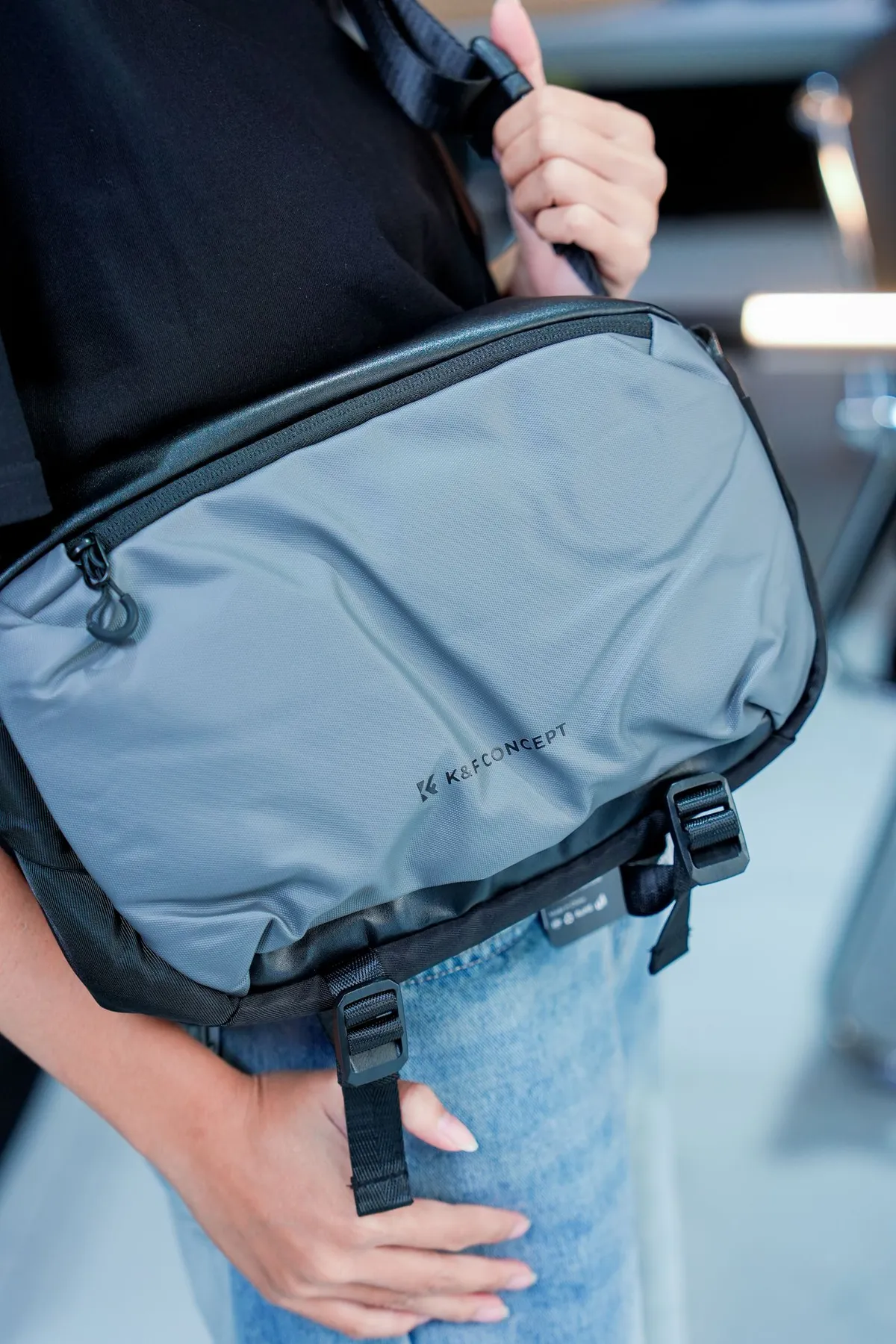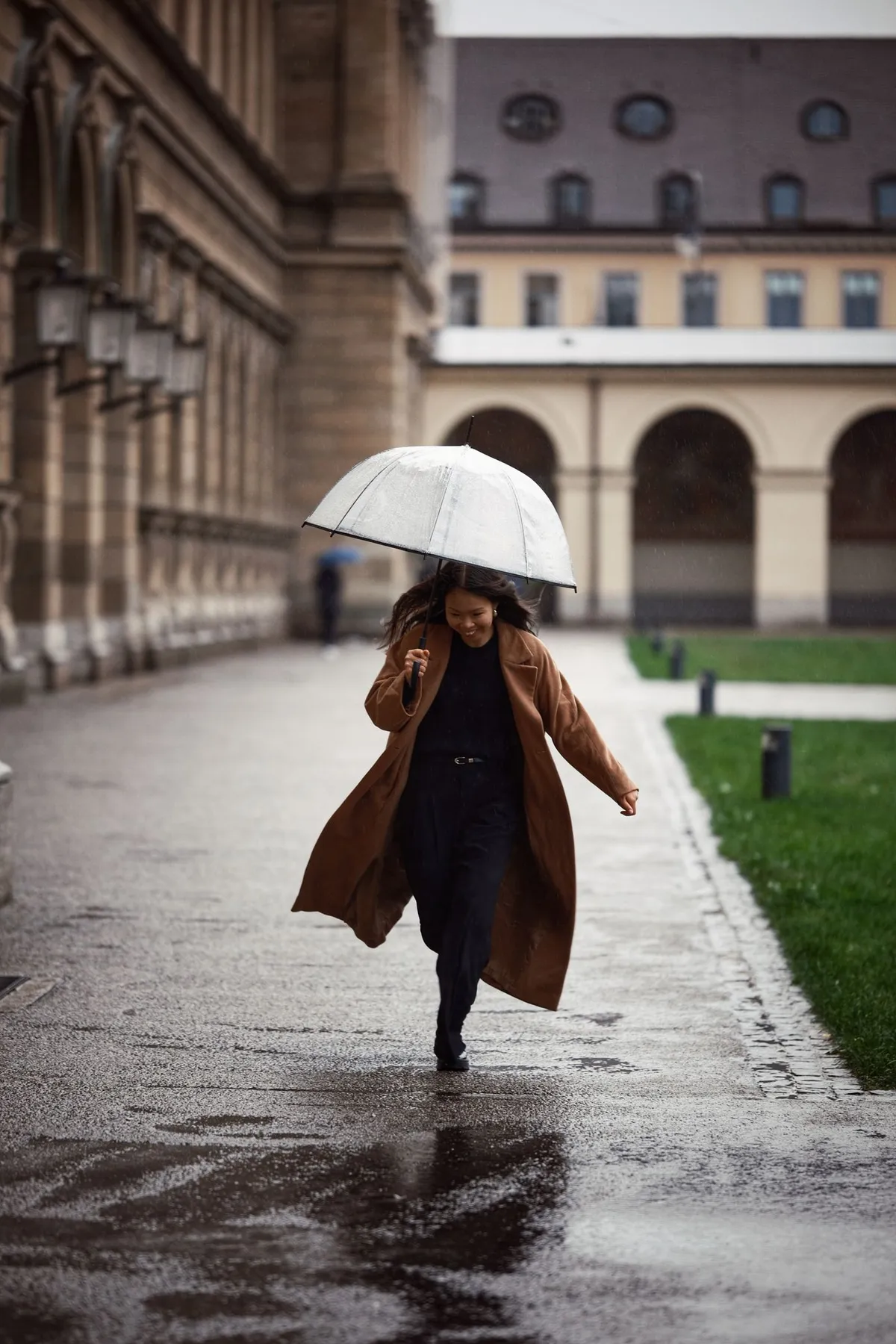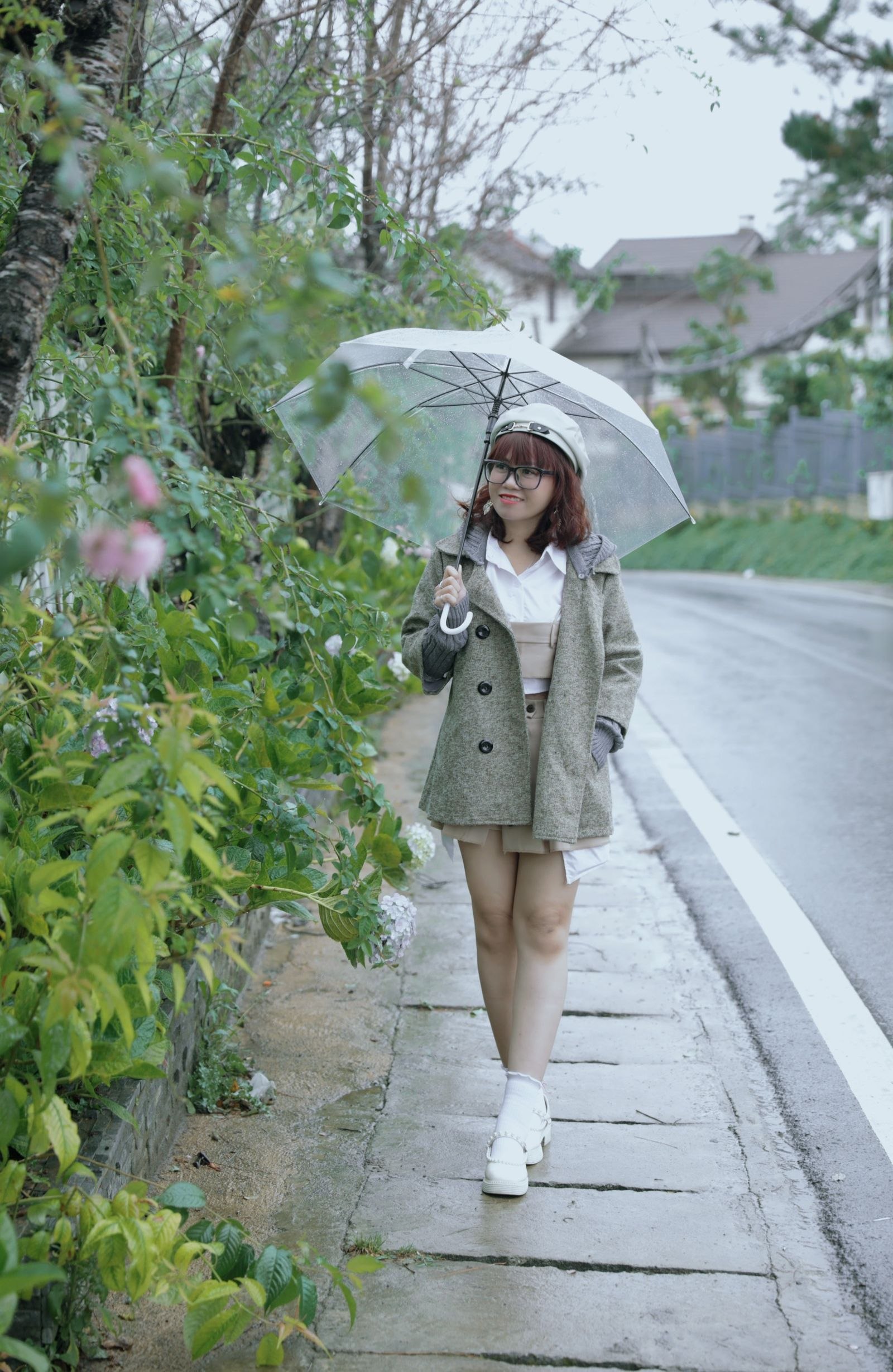
An umbrella changes how an outfit is handled because one hand has another task. Try the coat, bag and ordinary belongings as a group before heading out, using each item according to its design. Check current weather and route information where relevant, and do not infer protection from an editorial image. The practical outfit should remain manageable for you when the umbrella is used and when it is appropriately closed and put away, rather than only while both hands are free for the mirror view.
Start with the day's actual requirements
Choose clothing appropriate to the conditions and your personal needs, using reliable product information for any performance requirement. A coat's shape or color does not establish weather suitability. Read its guidance and check the route rather than assuming every rainy outing is the same. Keep the clothing group manageable and avoid adding accessories without a clear role. The umbrella should join a practical base outfit, not become another item expected to resolve an outer layer that was never suited to the day's plans.
Check sleeves and ordinary handling
Wear the actual coat and move within your comfort and ability. Follow the umbrella's operating instructions and keep the environment appropriate when checking it. Notice whether the sleeve arrangement interferes with ordinary handling or requires repeated adjustment. Do not force a cuff into a shape that conflicts with the garment's construction or care needs. A useful outfit lets the products be used as designed. If the sleeve is awkward for the task, compare another suitable layer rather than assuming the appearance of the combination is enough to make it practical.
Give the bag a clear carrying role
Use the bag according to its design with the relevant contents appropriately stored. Keep valuables secure and check your own comfort. Consider the ordinary task required of the other hand without overloading attachments or inventing a carrying method the bag was not made to support. If the group is difficult to manage, reduce nonessential contents or choose another suitable existing bag. A larger bag is not automatically a better solution if it simply creates more load and another handle competing for the same available hand.
Plan the indoor transition
Follow instructions for handling the closed umbrella and respect the rules and facilities of the place you enter. Keep it separate from unsuitable neighboring belongings and avoid obstructing routes. Give the coat and bag appropriate positions as well. The transition should not depend on balancing several items while searching for another storage surface. A clear plan for the actual stop helps the outfit work through the whole outing, including the stage when the umbrella is no longer open but still needs responsible handling.
After the day, check the items' condition and follow their care requirements before storage. Remember the combination that worked and the specific part that needed adjustment. A practical rain outfit is personal to the products, route and your needs; it does not come from one universal coat-and-bag formula. Considering the occupied hand adds an ordinary use to the decision, helping you choose a manageable group that works beyond the moment all the pieces are first put on together.
Continue planning with Rainy-Day Outfits That Still Work When You Step Indoors, Choosing a Crossbody Bag for Travel and Everyday Errands.