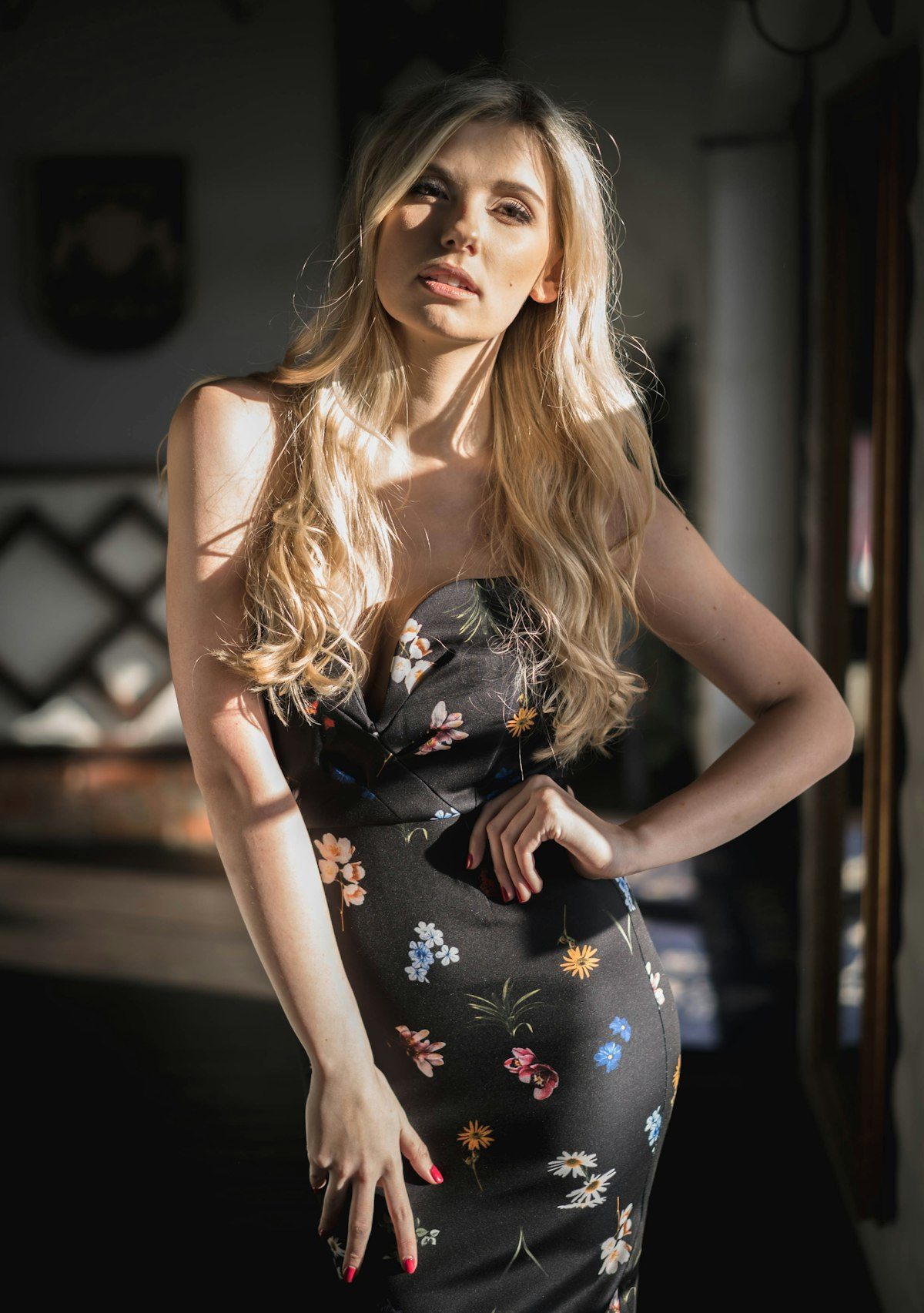
A pendant can disappear into a print, cross a neckline or become the most noticeable part of an outfit. None of those effects is automatically wrong. Decide what role you want the necklace to play, then compare the actual piece with the garment. A clear intention is more useful than adding another accessory simply because the first one is less visible in a photograph.
Look at the necklace and print together
Try the combination under appropriate conditions and follow the jewellery and garment instructions. Notice where the pendant sits naturally rather than holding it in a preferred position. If the necklace has an intended adjustable arrangement, use only the supported options and avoid forcing a fastening or improvised extension.
Look at the broad print relationship before concentrating on a small detail. The pendant may contrast with one part of the pattern and blend into another as you move. A still close-up cannot establish how consistently visible it will remain throughout the day.
Choose the level of emphasis
Ask whether the necklace is meant to be a clear focal point or a detail noticed nearby. A subtle result does not require correction if you enjoy it. Equally, a prominent pendant can be appropriate when the rest of the outfit supports that choice. Let your intended effect guide the comparison.
The wardrobe colour guide can help connect the necklace with the broader combination. A repeated colour may create a link without an exact match. Do not make unsupported claims about metal, stones or garment material based on appearance alone; use the actual reliable product information where those details matter.
Check contact and movement
Notice the pendant near seams, embellishment and any layer it will touch. Follow the items' relevant care information and avoid a combination that risks snagging or damage. Do not rely on constant repositioning to keep a delicate surface away from a feature it naturally meets.
The necklace-clasp check article provides a related reminder to consider the whole piece, including the fastening. Include ordinary movement appropriate to the day and inspect the combination from a useful distance. A necklace needs to work as jewellery you wear, not just as a carefully placed object in one image.
Keep the outfit decision proportionate
Compare a different supported necklace arrangement, another piece you already own or no necklace at all. Change one element at a time so that you can identify the effect. A busy print does not create an obligation to buy a larger pendant or a second layer of jewellery.
Record the successful combination if it will help another day, using an appropriate private reference. Describe the actual garment and necklace rather than a vague rule about all printed dresses. The useful result is a relationship you enjoy and can comfortably wear, with room for the pattern and pendant to change as the outfit moves.