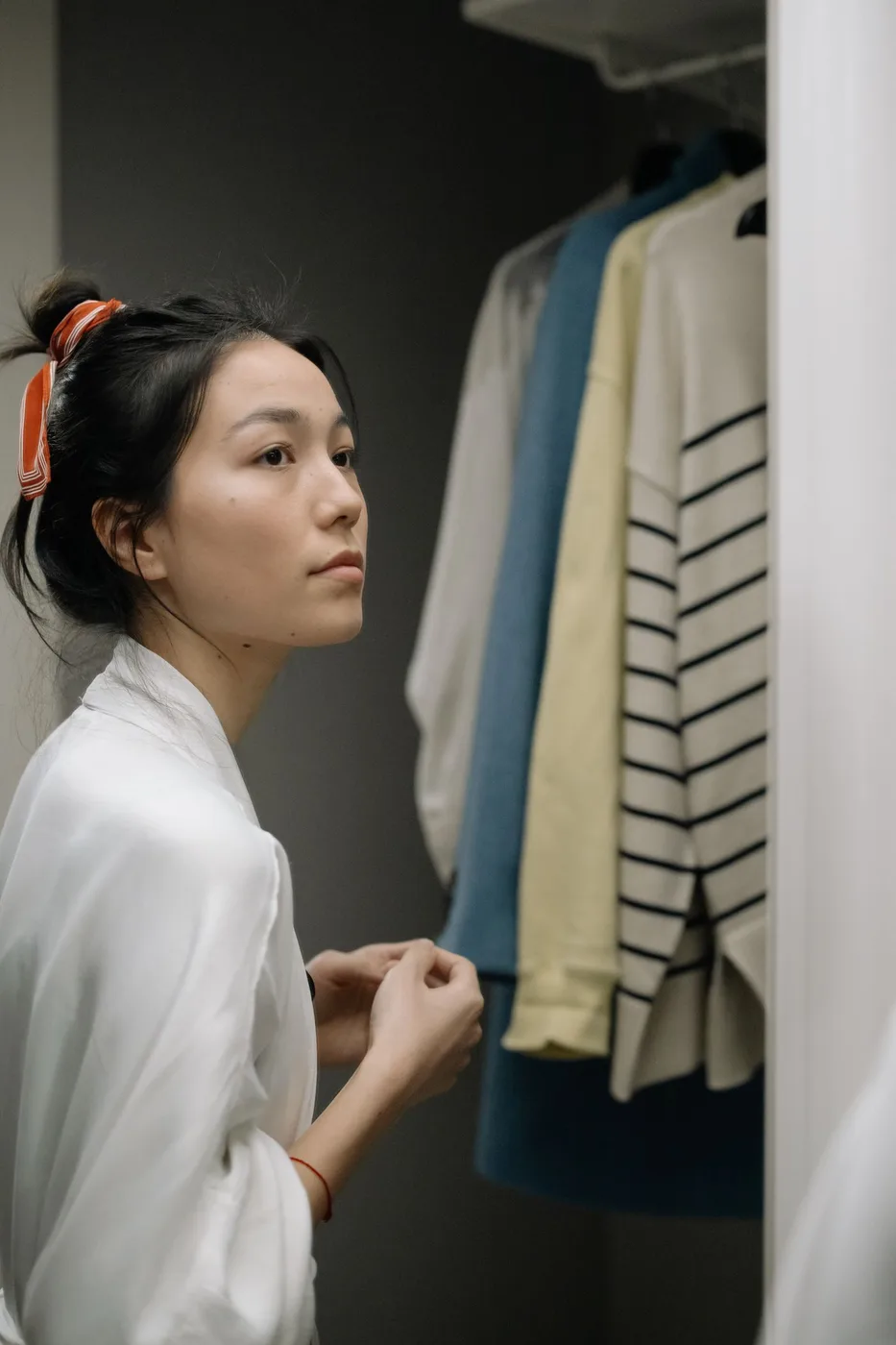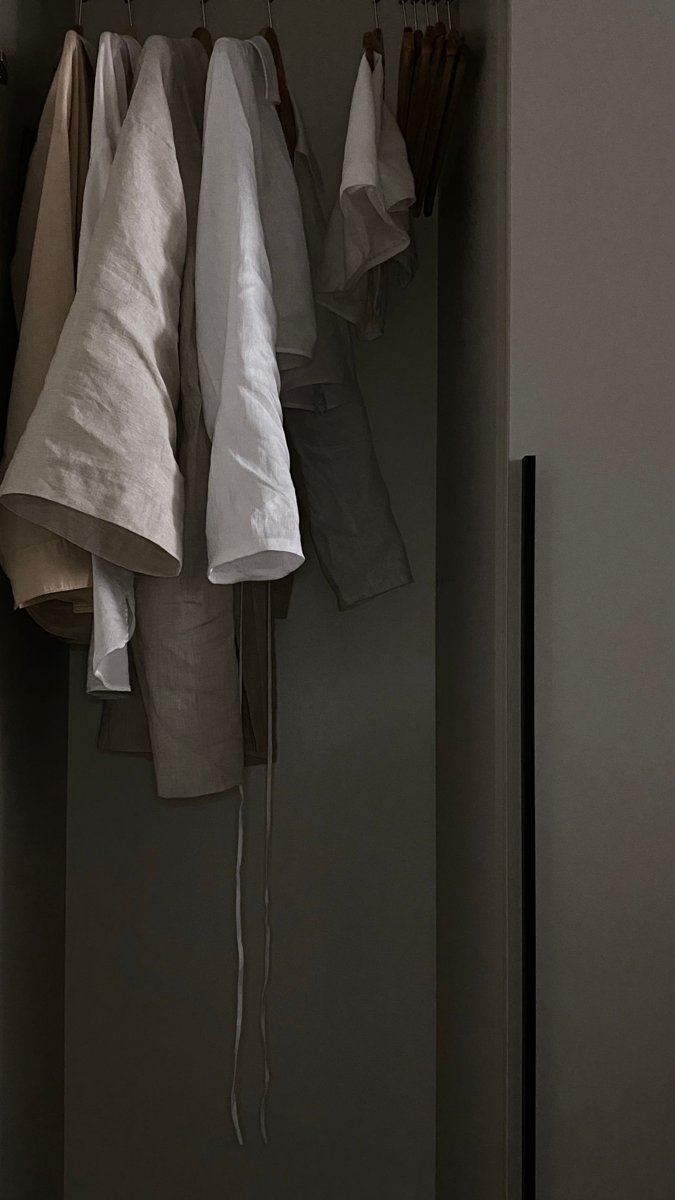
Two neutral garments can look identical on separate hangers and noticeably different when worn together. The difference may be a useful part of the outfit or an unwanted near-match. Decide which result you actually want before shopping for a supposed correction. A close colour relationship does not have to imitate a matching set, and a product name alone cannot settle how the pieces look together.
Compare the real pieces in one view
Place the garments together appropriately and look at them in the light relevant to their intended use. Follow their handling instructions and keep them identifiable. Avoid comparing a filtered online image with a dim photograph of your own trousers as though those conditions provide an exact colour assessment.
Notice texture and finish as well as apparent shade. A smooth shirt and a textured knit may create a visible distinction even when their colours are close. Keep factual fabric information tied to the actual labels or reliable source information rather than inferring composition from the surface alone.
Choose the relationship deliberately
Ask whether you want a coordinated combination, a clear contrast or an actual supplied matching set. Those aims lead to different decisions. If you are content with a tonal outfit, a small difference may be part of its character. If exact correspondence matters, verify the actual products rather than assuming similar colour names establish it.
The neutral-wardrobe colour guide can help connect the choice with the rest of your clothes. You may already own a supporting piece that makes the relationship clearer. Try that before treating the uncertain near-match as proof that an entire new outfit is necessary.
Test the supporting pieces
Look at the garments with the shoes, bag and layers intended for the day. A third element can make the colour difference seem deliberate or introduce another competing relationship. Change one piece at a time so that you can identify what actually helps. Do not replace the whole combination during each comparison.
Include ordinary movement and the relevant setting. An outfit assembled only for a close photograph may answer a different question from one intended for a workday. Keep a useful wider view rather than relying exclusively on a crop that hides where the two neutral pieces meet.
Avoid buying an unverified solution
If a purchase remains useful, describe the role and the relevant colour question clearly. Ask the seller for current product information through its actual process, and follow the applicable fitting and return requirements. Do not treat a confident colour description from another person as a guarantee of an exact match.
The wardrobe-role comparison article can help decide whether the additional piece earns its place beyond this single combination. A successful neutral outfit has an understandable intention. It does not require every closely related colour to be forced into an exact correspondence that the garments never promised.